Sculpting a Story

One of the most common questions from audiences after seeing Cabinets of Kismet is “Where did you get the idea for the story?” While I’ve talked a little about Shaun Tan before on this blog, I’m going to try and outline the process of creating the story for this play, because it was a rather unusual journey.

Genna and Amie with Lightbulb Head. Photo by C. Stanley Photography.

Genna and Amie with Lightbulb Head.             Photo by C. Stanley Photography.

The initial seed of the story came from conversations between Genna, Lisi, Nikki and myself about Tan’s work. We all read various books and stories by him and came to the conclusion that the themes we were most interested in exploring were those of alienation and outsider status, as well as the journey of accepting change and dealing with fear. We each created prototype puppets with various objects and paper and somewhere along the line, I think I came up with the initial idea of having a character who escaped from one world into a very different other one. We called him Kismet and based his look on a magnifying glass photo holder with alligator clips that Lisi had.

Most of the puppets were created before the specific moments of the story, which is the reverse of how we usually work. Once we had a cast of puppeteers, we ended up doing a few sessions of improvisation with the object characters, to figure out what each could do best, and how they could express various emotions and states of being. Then our director Carmen Wong put those various segments in order or arranged them on the set and we worked out the timing so that everyone had a sequence. We ended up each taking 2-3 principal characters, although we also switch off a lot to make things easier. With object puppets like this, it doesn’t work as well to say “Be sad” because the features of the puppets don’t change. They have to move or perform an action to express that sadness, and that of course is different for each object. Breaking down all the emotions and reactions of each character into tiny specific actions for the puppets was a long and very time-consuming process.

Kismet escaping across the drawers. Photo by C. Stanley Photography.

Kismet escaping across the drawers.                  Photo by C. Stanley Photography.

In the end, I think we probably could have benefited from having more audience input. Because of scheduling and various cast changes, we didn’t have a chance to ask people to come and give feedback during rehearsals and I think that would have been very helpful. Object world was much intentionally much busier than Paper world, and therefore a little harder to follow (especially if you came in late). Just for fun, here is an excerpt of a ‘script’ written by puppeteer Amie Root, detailing her movements just before the destruction of Object world. I think it gives a good sense of our approach to our movements and characters.

When Genna perches over Cecilia, enter with Demon Bird to terrorize Mophead. Fly off SL around the garage unit and hover by the theater unit until Amy is set for handoff of bird. IMMEDIATELY pull swirl dancer from her drawer behind theater unit. Quietly as possible, unwrap the jingle chain, set her and the telephone cord on top. QUICKLY strike the jingle chain. IMMEDIATELY go to nurse at garage unit and enter when Kismet calls. Freak out over zoom. Hand off to Genna. 

Marvelous Marionettes

For a very long time, marionettes were the one form of puppetry I was a bit scared of. So many strings, so wobbly and hard to control. They felt like the most complicated kind of puppet out there and I wasn’t sure I could construct one adequately, let alone perform it. In spite of that, quite a few of our characters in the Paper World section of The Amazing and Marvelous Cabinets of Kismet are marionettes or variations of marionettes. Here are some photos of the different controls and how they work.

Gecko marionette control

This is the control for Gecko. It moves his back legs and one of his front legs.

Loopy marionette control

This is the control for the Loopy. It’s a variation on a 19th century control that I found a picture of in a book. The bottom piece unhooks to move the two “arms” of the puppet, while the top piece anchors the rest.

School of Fish control

One marionette is complicated enough. Putting together four of them makes some things easier and some things harder. You sacrifice individual movement when you put multiple puppets on the same control, but it’s worth it to get the effect of the group moving together. Genna came up with the design for this control, of a whole school of Paperfish.

Puppet Workshop Announcement!!

scrap logoThe Amazing and Marvelous Cabinets of Kismet is a project that happened because a group of artists all read books by Shaun Tan and were inspired to create a new story. We hope that watching our puppet play inspires other people to create their own stories as well. To help that process along, we are thrilled to be able to present a PUPPET-MAKING WORKSHOP on Sunday, May 12 in collaboration with SCRAP DC.

Directly after the 2pm show, Karen Klein and Heather Bouley from SCRAP will lead a workshop on making puppets from recycled materials. This workshop is for all ages and is a perfect activity for families to do together. There are only 25 spots in the workshop due to space limitations, so buy your tickets today!

The Origin of the Puppet

While some of the characters in this show, such as Kismet, have changed very little over the last year and a half, others have gone through lots of transformations. Darwin would probably be unimpressed with the random ways our puppets tend to mutate, as it tends to follow comments along the lines of “Does it look right?” rather than any natural selection. Here are some photos tracing the evolution of one object puppet, the Swirl Dancer.

I added the wood cutout to the melon baller. The way the circles at the top and bottom echoes the spiral is nice.

I added the wood cutout to the melon baller. The way the circles at the top and bottom echoes the spiral is nice.

Painting the swirl blue helps and the purple yarn hair brings focus to the top circle. The little purple scarf adds color.

Painting the swirl blue helps and the purple yarn hair brings focus to the top circle. The little purple scarf adds color.

Puppets can be fragile. After a couple of early rehearsals, the wooden swirl broke off. We still liked the hair, but we wanted to give her a skirt–at this point we were all thinking of her as a dancer character. But a skirt made from what? A sponge? Paper party blowers?

Genna ended up making a skirt from a scrunchie like fabric and layering it with a sparkly filigree decoration.

She's perhaps a bit more sparkly and princess-like than when she started out, but we like her!

She’s perhaps a bit more sparkly and princess-like than when she started out, but we like her!

What Can You Do With a Broken Umbrella?

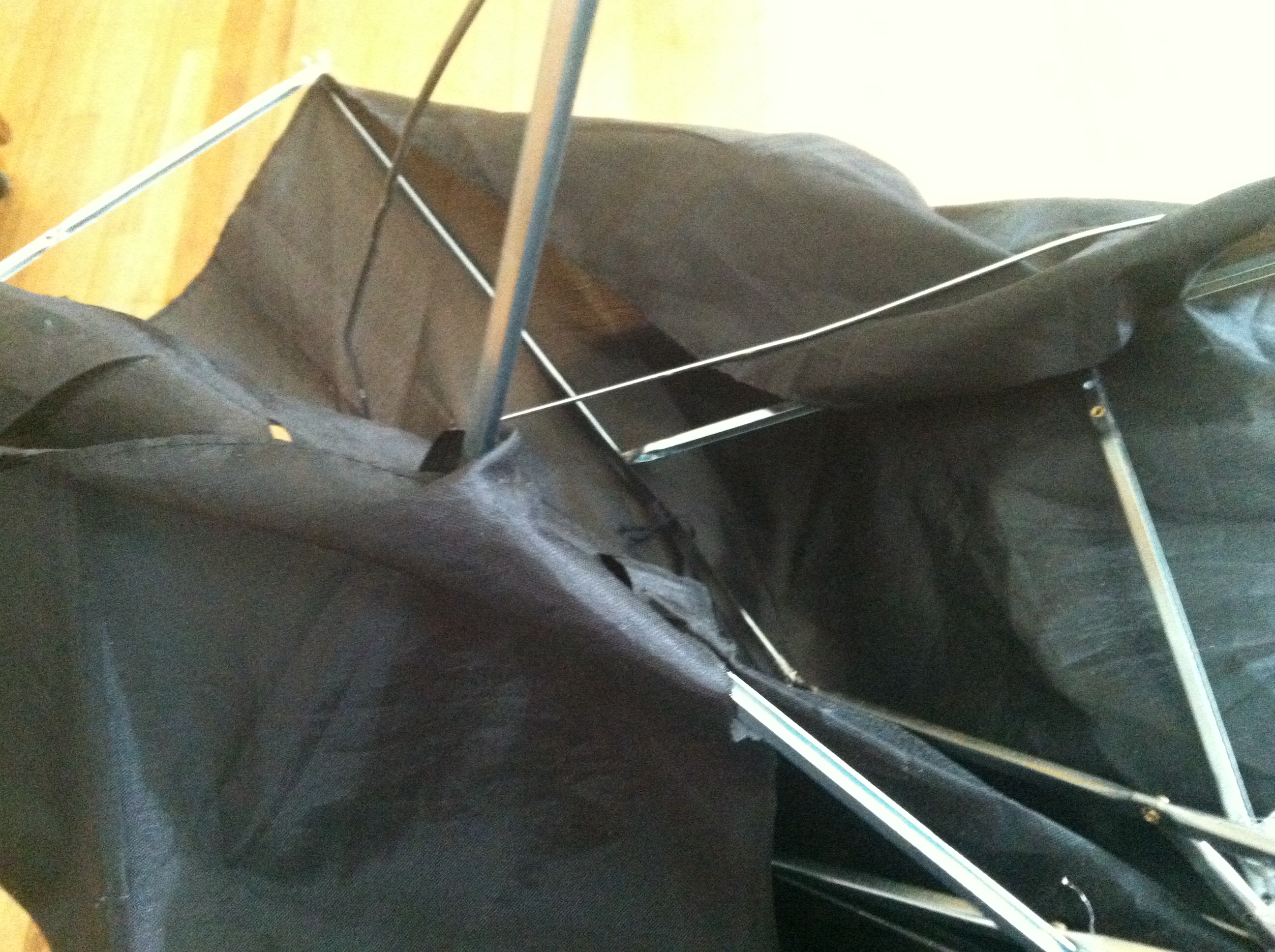
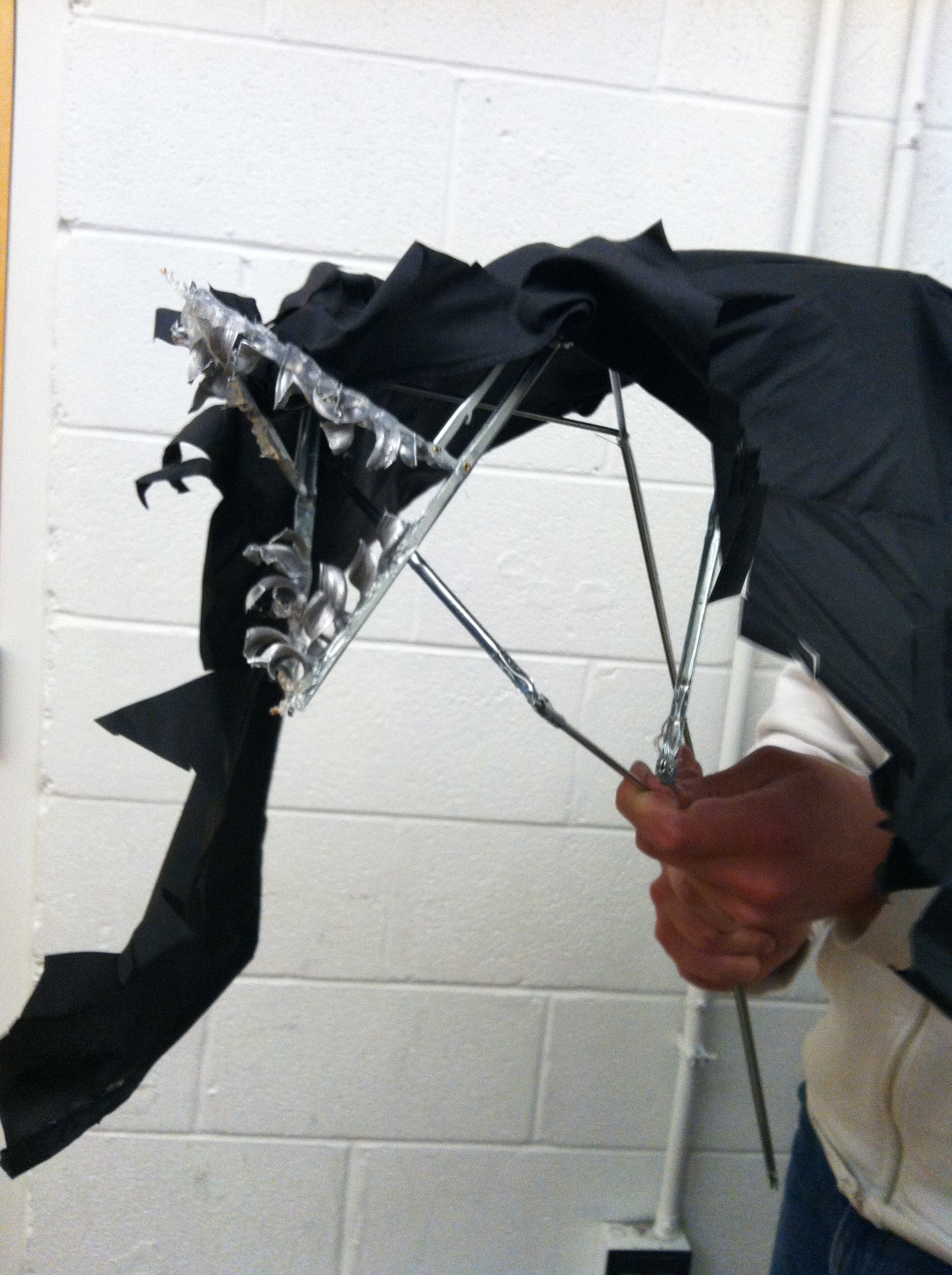
So many things, if you are a puppeteer! After taking apart LOTS of umbrellas for various puppet projects this winter, we have a much better understanding of how they work–and why they break so easily! Fortunately we can use the broken pieces in many different ways. Here are a few of them:

We take large broken umbrellas apart and use the spokes as controls for shadow puppets.

We take large broken umbrellas apart and use the spokes as controls for shadow puppets.

An in-progress shot of a puppet from Cabinets of Kismet that uses the joints of a broken umbrella.

An in-progress shot of a puppet from Cabinets of Kismet that uses the joints of a broken umbrella.

And here it is again a little further along!

And here it is again a little further along!


Building Kismet #4

Our efforts have been focused on paper puppets for the past few weeks. With the help of Matthew McGee and puppeteers Heather Carter, Amy Kellett and Russell Matthews, we’ve created some new citizens of Paper World, out of scraps from SCRAP DC, local printers and the contents of the recycling bin.

Any guesses as to how these components might fit together to form a paper puppet?

Any guesses as to how these components might fit together to form a paper puppet?

Big or small, everything is made from paper!

Big or small, everything is made from paper!

Not too many tools needed--just a glue gun and scissors.

Not too many tools needed–just a glue gun and scissors.

Two paper friends, ready to be animated by puppeteers.

Two paper friends, ready to be animated by puppeteers.

Building a Shadow Show

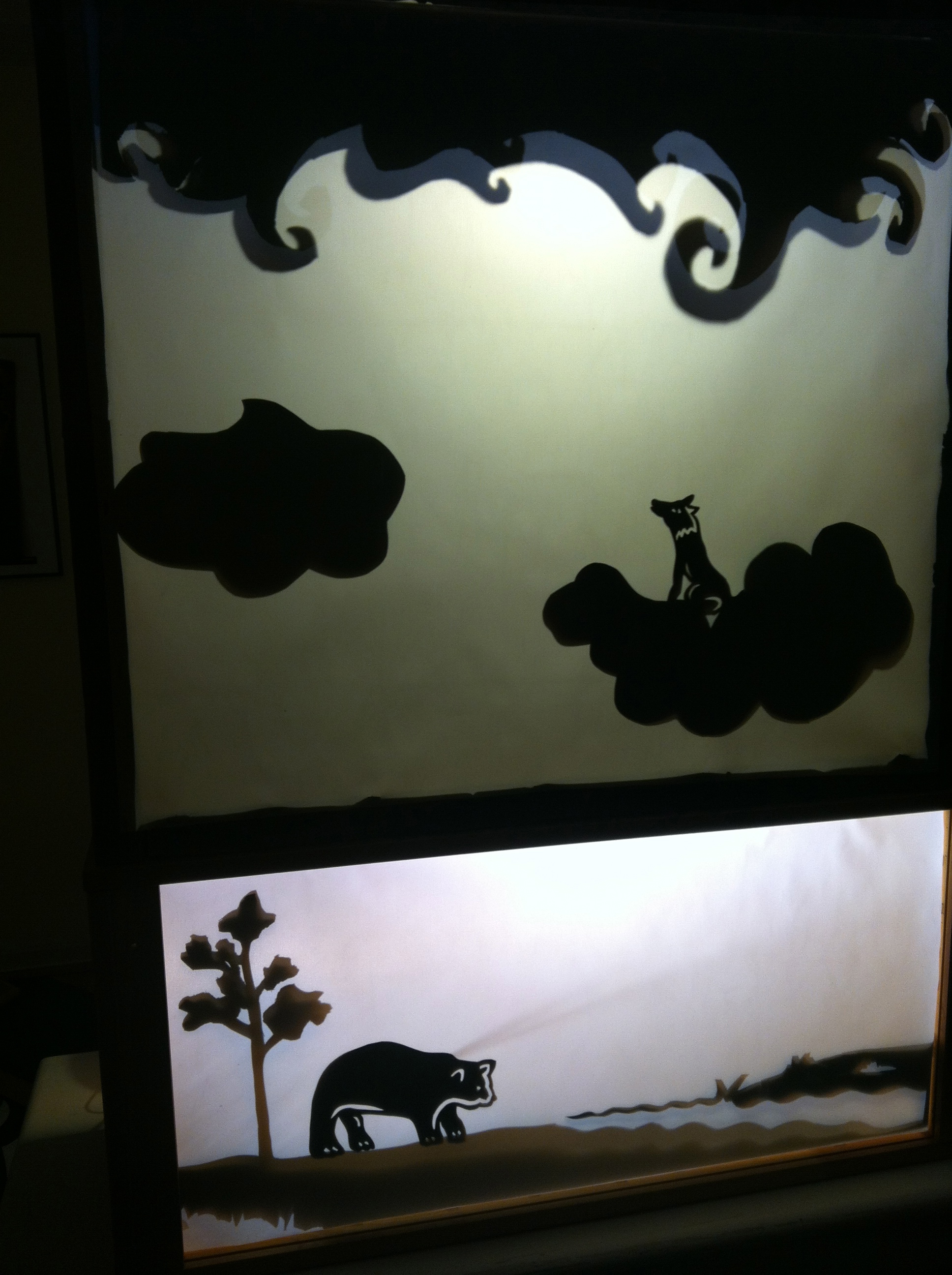
How long does it take us to build a new puppet show? Coyote Places the Stars, which is a 5 minute show, took us about two weeks from start to finish. That includes writing and recording the script, designing and creating the puppets, creating the lightboxes and rehearsing all the movement. We divided a lot of the work; Cecilia handled the script, based on an idea from Genna and cut out puppets, while Genna designed all the puppets and sets and built the lightboxes. Here are some photos from the process:

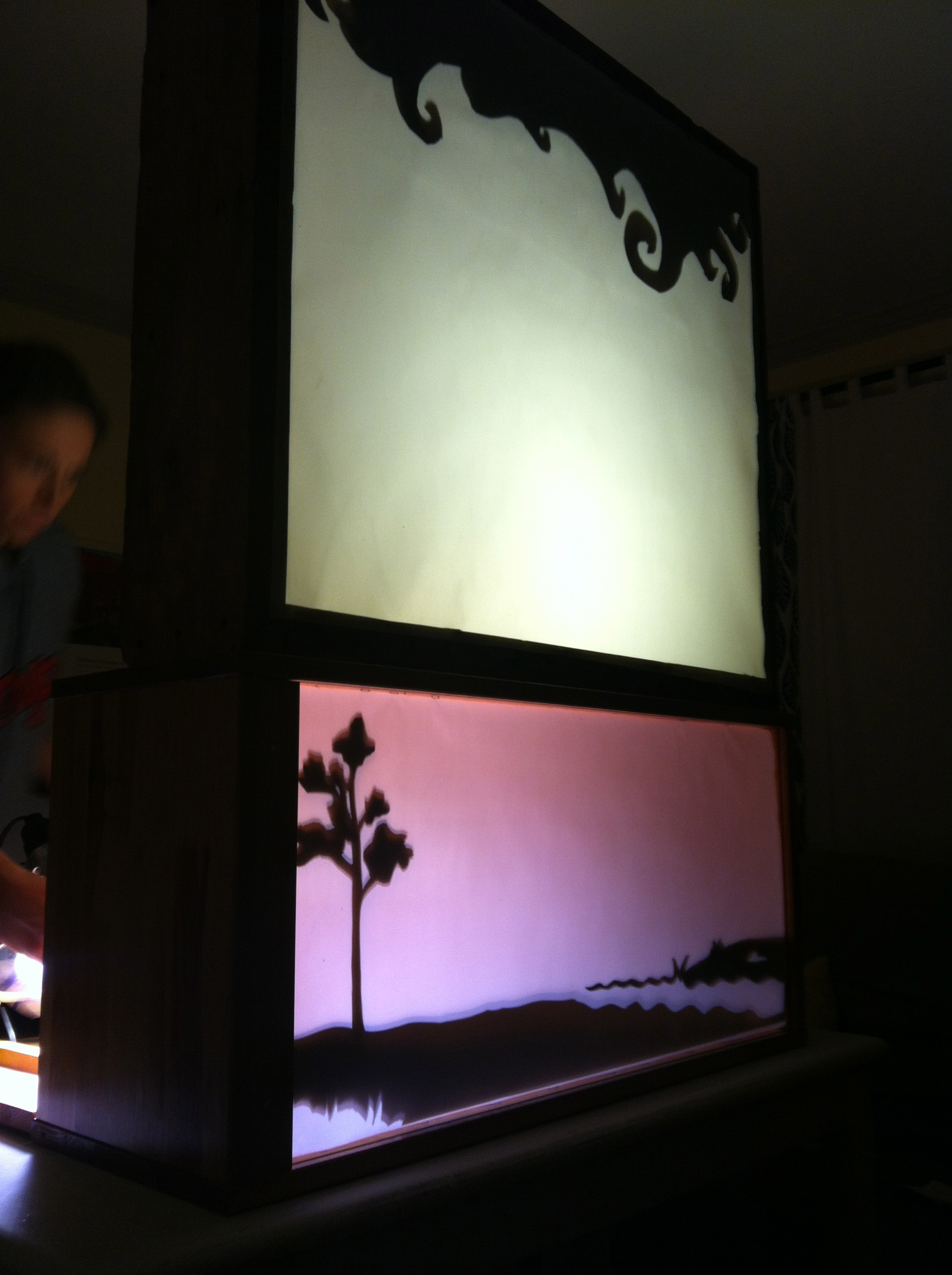
The lightboxes that Genna built. They stack to form a tower.

The lightboxes that Genna built. They stack to form a tower.

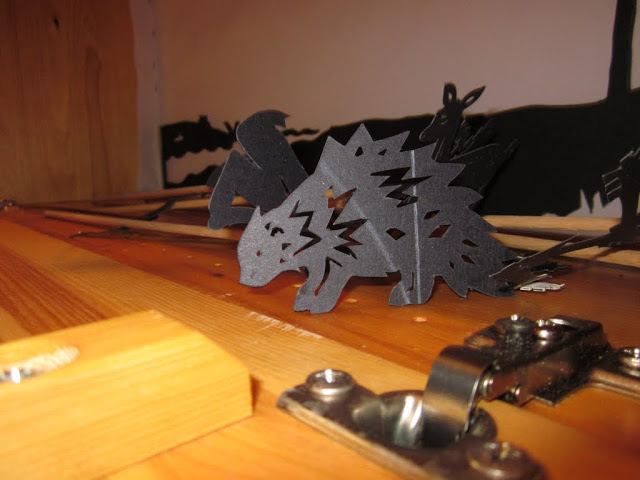
Puppets in process of being cut out. After they are cut, we add velcro, sometimes to both sides so we can flip them.

Puppets in process of being cut out. After they are cut, we add velcro, sometimes to both sides so we can flip them.

Between the puppets and the stencils for the workshop, the living room table got rather messy.

Between the puppets and the stencils for the workshop, the living room table got rather messy.

Finished puppets mounted on their rods with velcro, waiting to perform.

Finished puppets mounted on their rods with velcro, waiting to perform.

We experimented with various lights and gels to get different looks and colors on the different lightboxes.

We experimented with various lights and gels to get different looks and colors on the different lightboxes.

The final sets in place, with Coyote looking up at the stars and Bear waiting down on earth.

The final sets in place, with Coyote looking up at the stars and Bear waiting down on earth.

Store Spotlight: Fragers Hardware

Buying materials at a regular hardware store when you are a puppeteer is a process that can be awkward and frustrating. The fact is that you are often buying items which you are going to use in an unconventional fashion, and occasionally it is hard for hardware store people to accept that. Add to that the fact that I’m a woman, which apparently makes the employees of some places (cough, Logan Hardware, cough) automatically assume that I don’t know what I’m talking about. I’ve gotten strange looks in many different hardware stores around the city, except for one.

Fragers Hardware

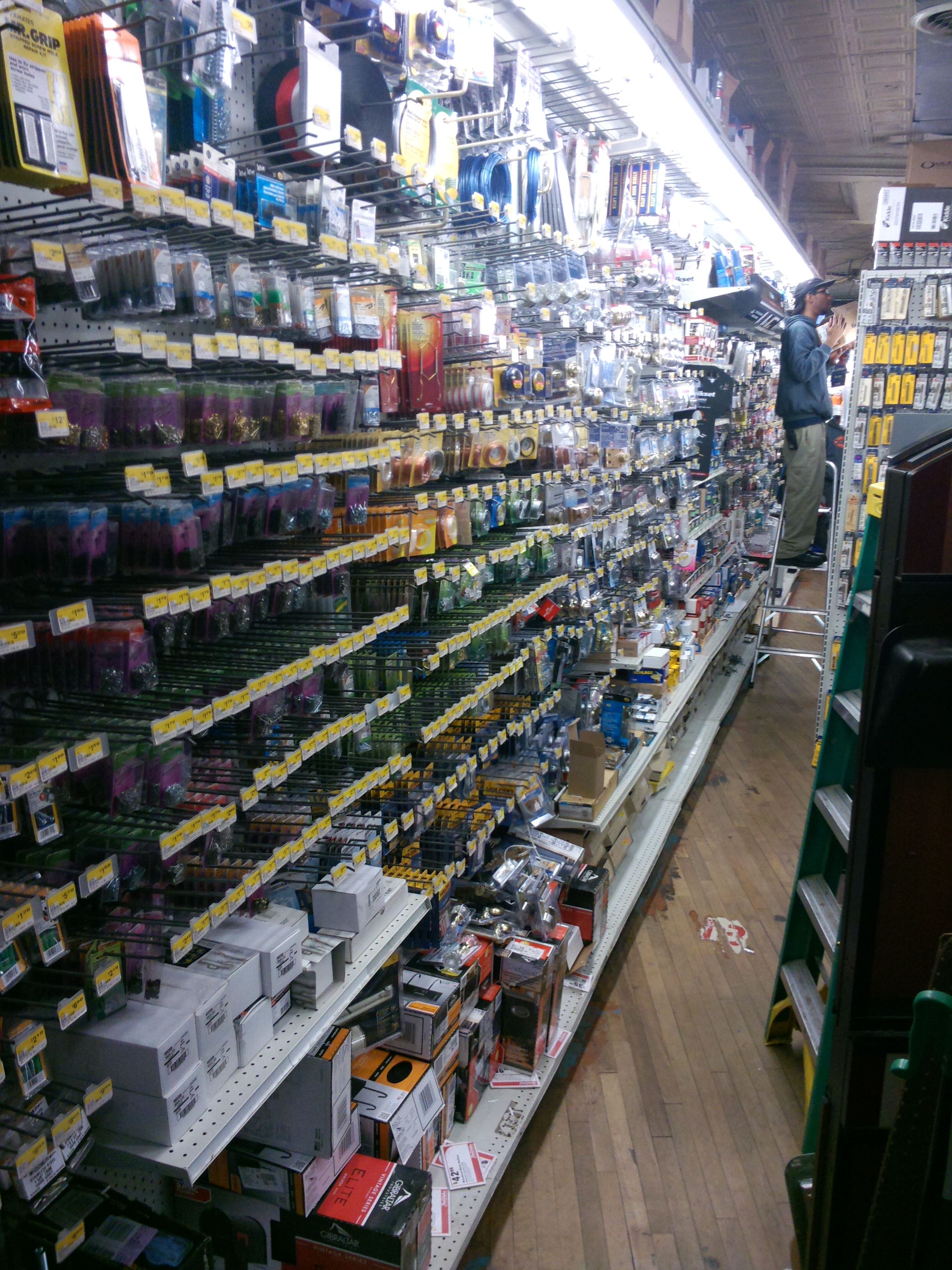
That is Fragers Hardware, a landmark of Eastern Market that has been in business since 1920. They are located at 1115 Pennsylvania Ave SE and occupy three distinct buildings–a hardware store, paint store and equipment rental store. Whenever I go to Fragers, there is always someone free to answer questions or give advice and when I explain that I am a puppeteer looking for materials, they nod and say “Oh, cool!” They always have what I am looking for, or are able to order it easily. If you appreciate stores where everyone is given time and consideration, make this your source for hardware in D.C.

The hardware room, where we spend lots of time searching for that perfect size nut or bolt.

The hardware room, where we spend lots of time searching for that perfect size nut or bolt.

Aisle full of supplies for puppet projects or home repair.

Aisle full of supplies for puppet projects or home repair.

We think this sign is entirely appropriate!

We think this sign is entirely appropriate!