Kindergarten Puppeteers

I was delighted to spend February working with the kindergarten after-care group at School within School at Logan Annex, a Reggio Emilia inspired center of learning. We spent four sessions learning about different kinds of puppets, building our own puppets from recycled materials and inventing scenes and stories to perform in small groups. Here are some photos of their marvelous, creative work!

The student who made this was very clear that it was a duck, with gold wings.

The student who made this was very clear that it was a duck, with gold wings.

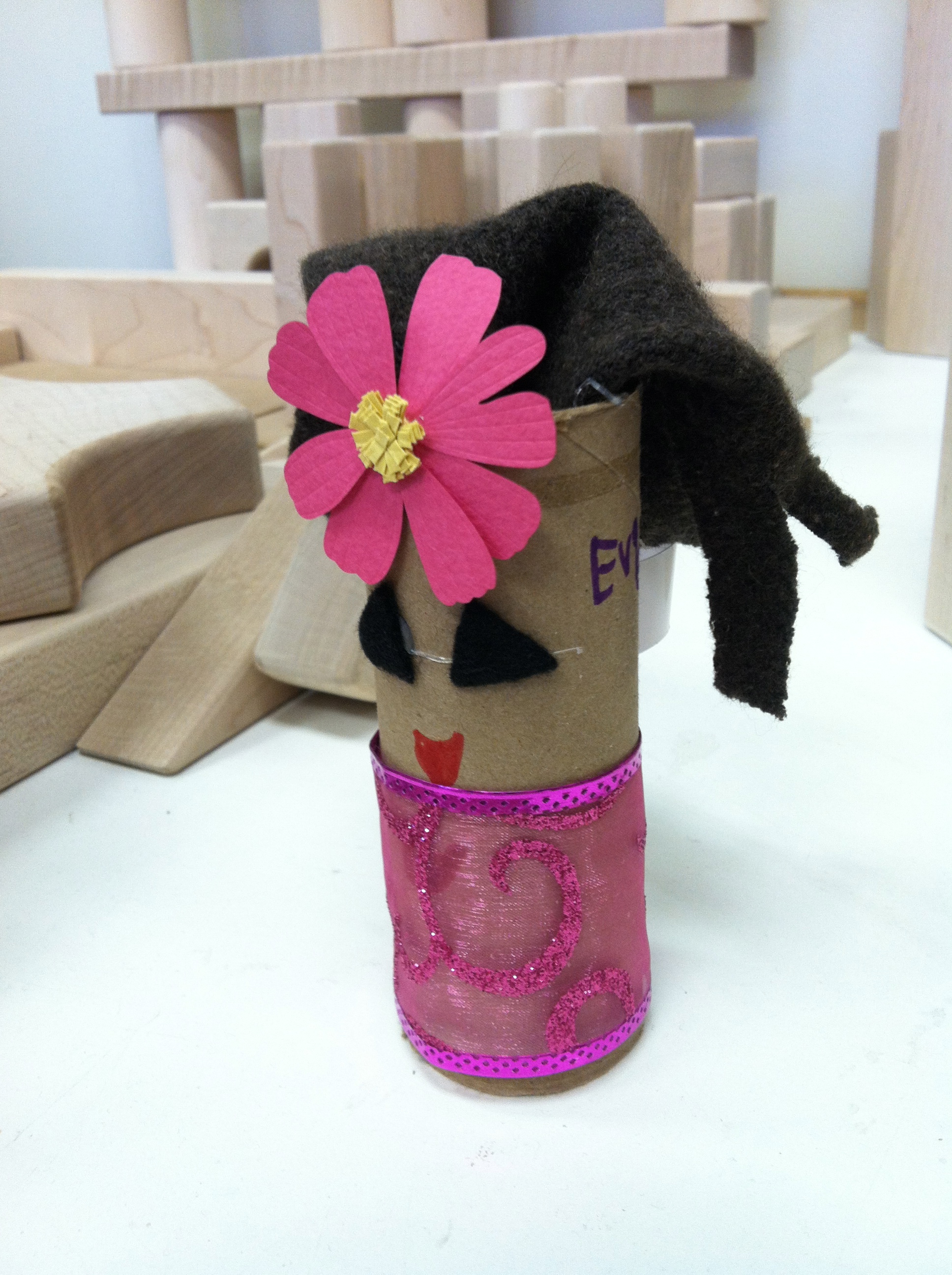
This puppet is named Elizabeth.

This puppet is named Elizabeth. Her hair is scrap fabric and her body is a toilet paper tube.

Students performing a scene using chairs as a stage.

Students performing a scene using chairs as a stage.

The chairs allowed students to play puppets both above and below the seats.

The chairs allowed students to play puppets both above and below the seats.

Three student made puppets hitch a ride on a chipmunk puppet that a teacher brought.

Three student made puppets hitch a ride on a chipmunk puppet that a teacher brought.

Building Kismet #4

Our efforts have been focused on paper puppets for the past few weeks. With the help of Matthew McGee and puppeteers Heather Carter, Amy Kellett and Russell Matthews, we’ve created some new citizens of Paper World, out of scraps from SCRAP DC, local printers and the contents of the recycling bin.

Any guesses as to how these components might fit together to form a paper puppet?

Any guesses as to how these components might fit together to form a paper puppet?

Big or small, everything is made from paper!

Big or small, everything is made from paper!

Not too many tools needed--just a glue gun and scissors.

Not too many tools needed–just a glue gun and scissors.

Two paper friends, ready to be animated by puppeteers.

Two paper friends, ready to be animated by puppeteers.

Necessary Evil Chores: Organizing Paper

Too much paper!

Too much paper!

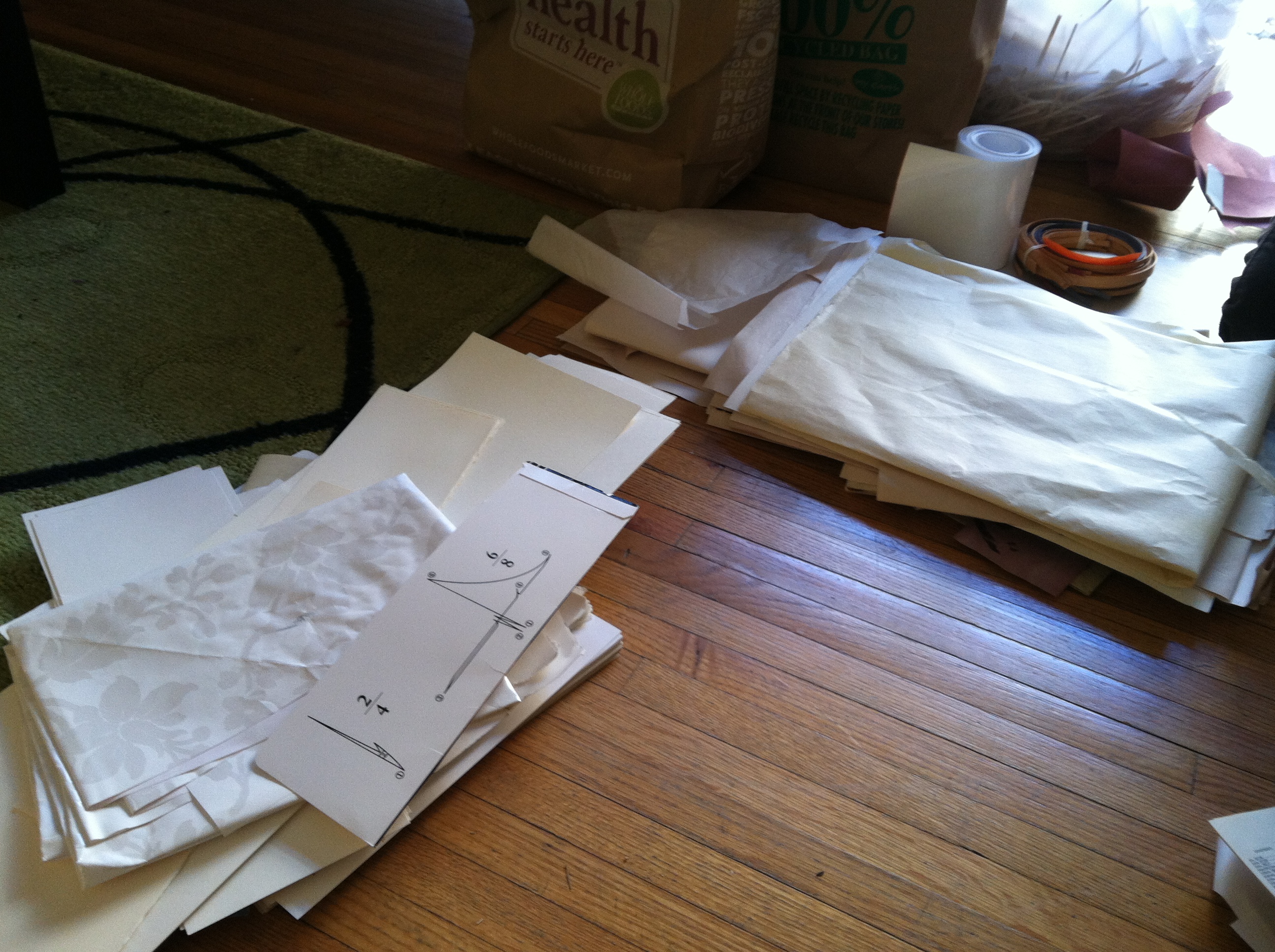
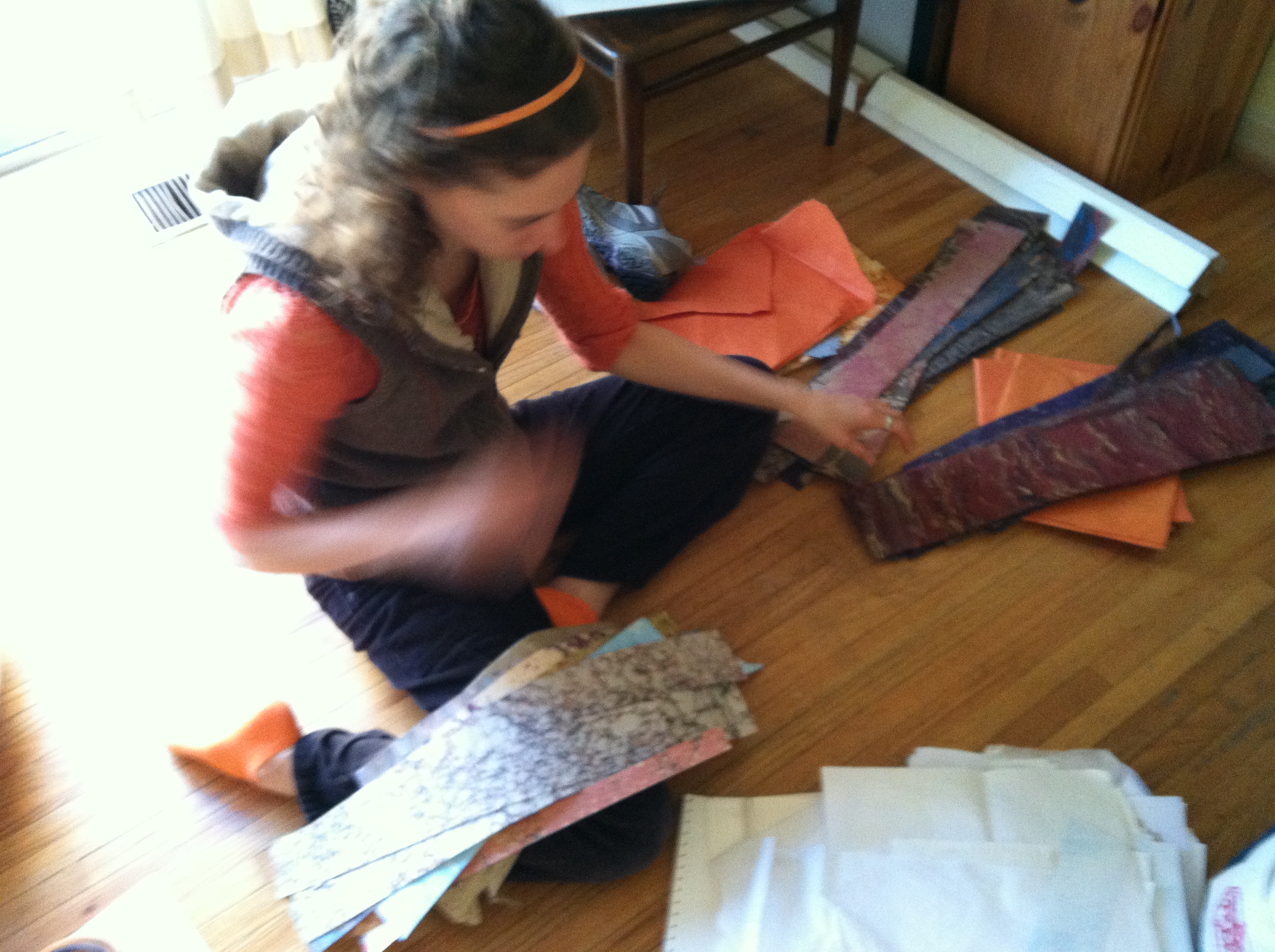
As we continue to build paper puppets for Cabinets of Kismet, the materials have started to overflow and as a result, the first floor of my house was rapidly getting submerged in scraps. Genna and I spent part of President’s Day getting it all organized by color and weight.

Genna sorting our many scraps of handmade paper.

Genna sorting our many scraps of handmade paper.

All nicely organized by color and weight, ready to be turned into puppets and set.

All nicely organized by color and weight, ready to be turned into puppets and set.


Building a Shadow Show

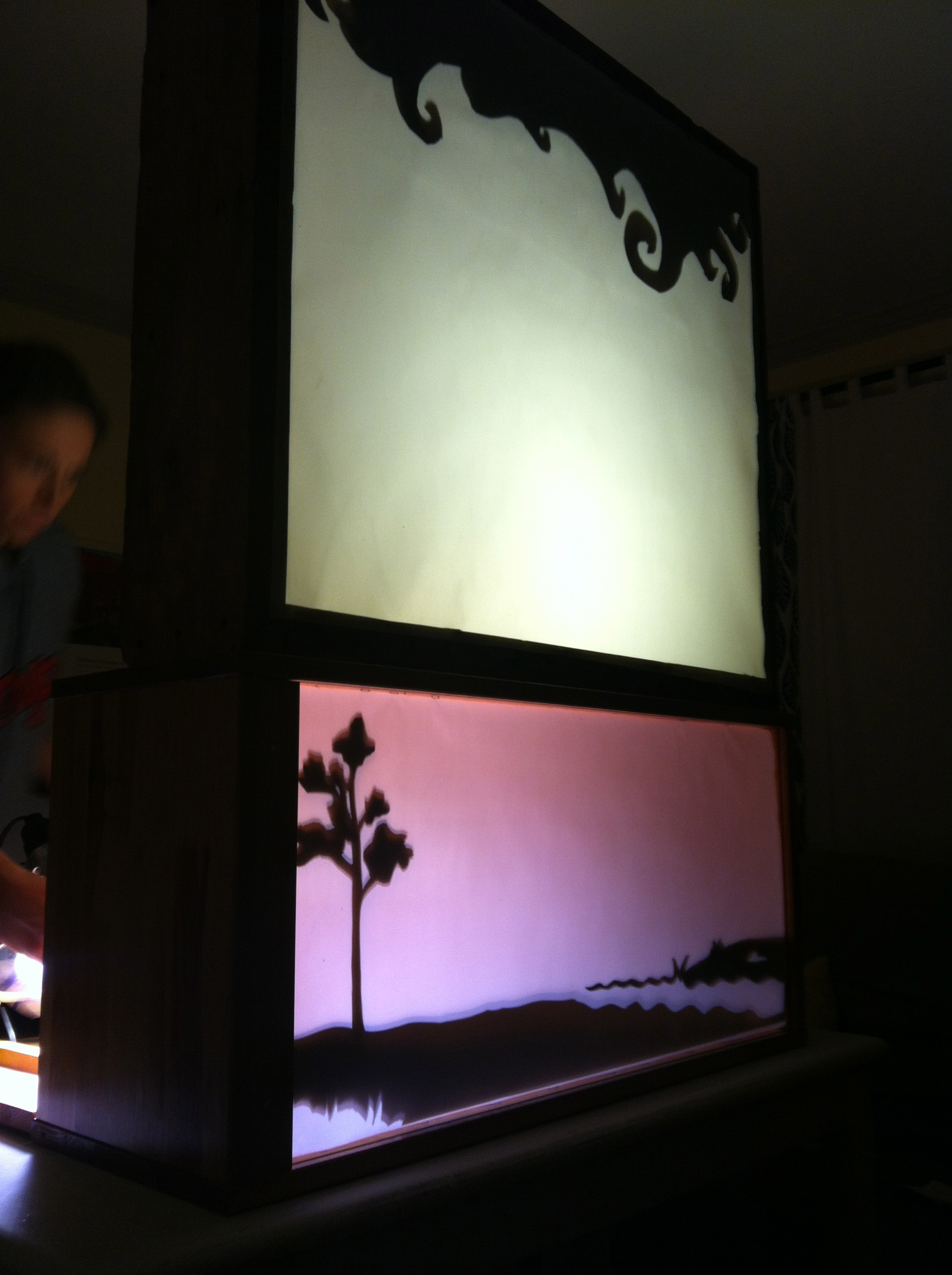
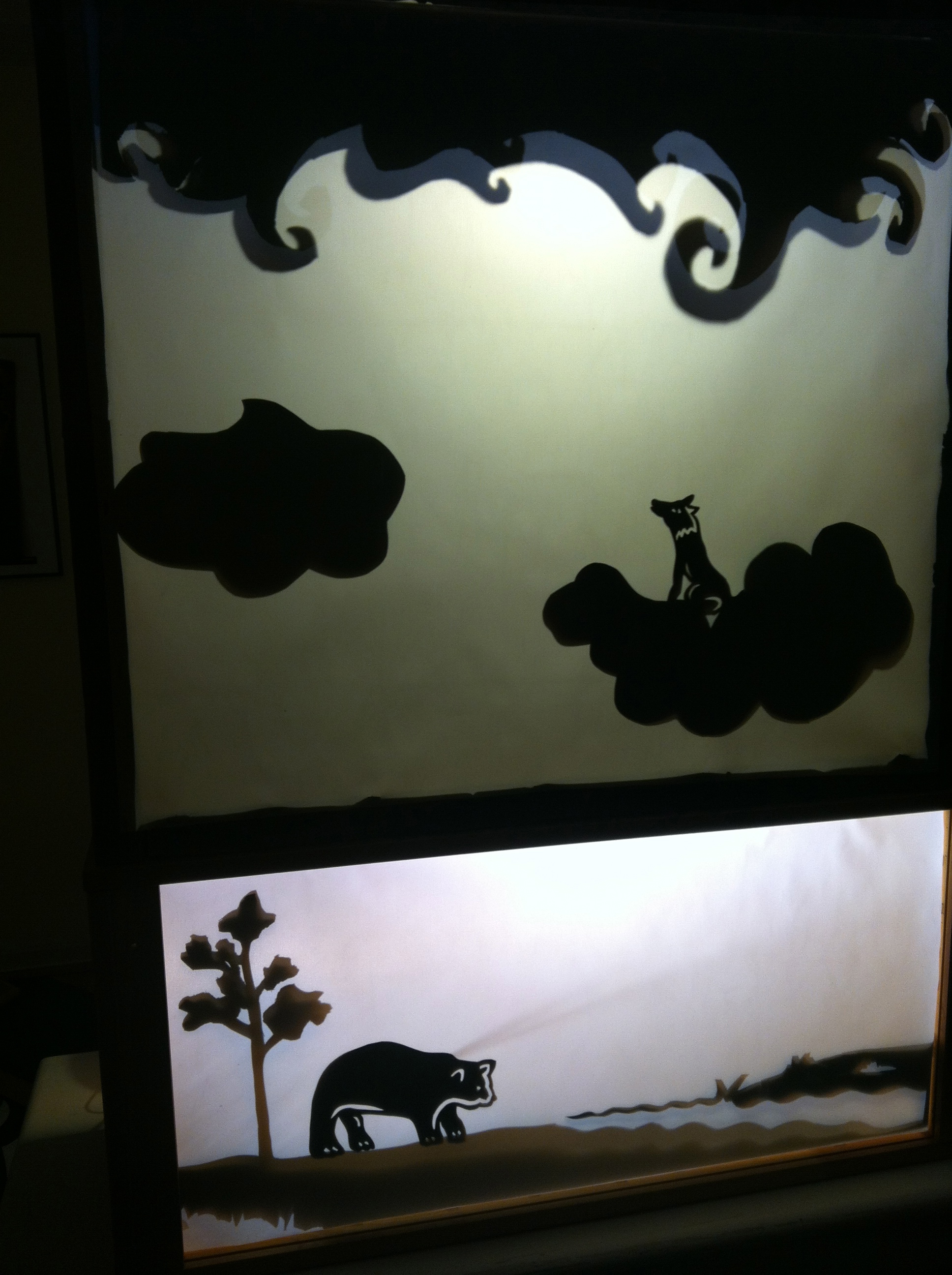
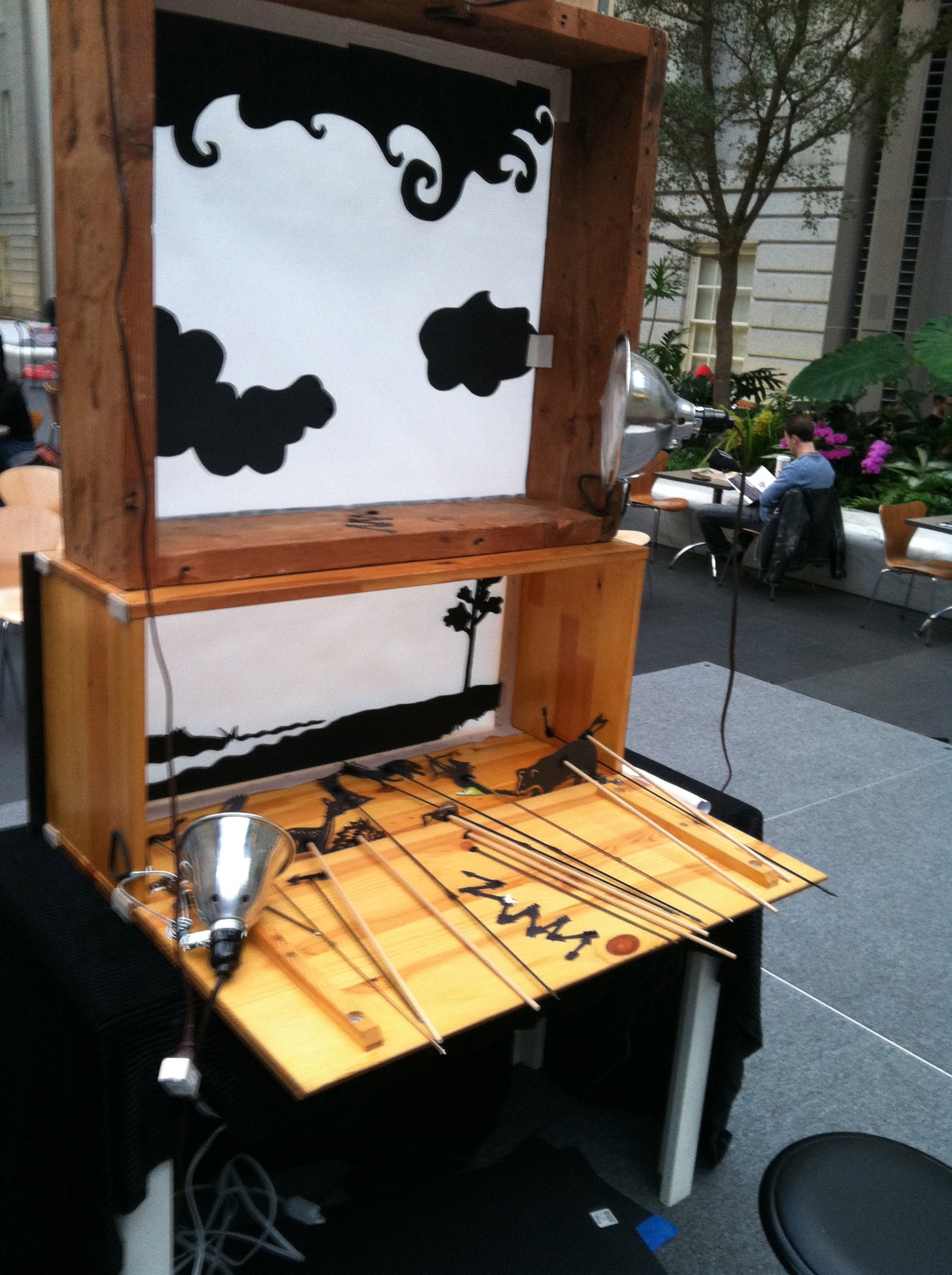
How long does it take us to build a new puppet show? Coyote Places the Stars, which is a 5 minute show, took us about two weeks from start to finish. That includes writing and recording the script, designing and creating the puppets, creating the lightboxes and rehearsing all the movement. We divided a lot of the work; Cecilia handled the script, based on an idea from Genna and cut out puppets, while Genna designed all the puppets and sets and built the lightboxes. Here are some photos from the process:

The lightboxes that Genna built. They stack to form a tower.

The lightboxes that Genna built. They stack to form a tower.

Puppets in process of being cut out. After they are cut, we add velcro, sometimes to both sides so we can flip them.

Puppets in process of being cut out. After they are cut, we add velcro, sometimes to both sides so we can flip them.

Between the puppets and the stencils for the workshop, the living room table got rather messy.

Between the puppets and the stencils for the workshop, the living room table got rather messy.

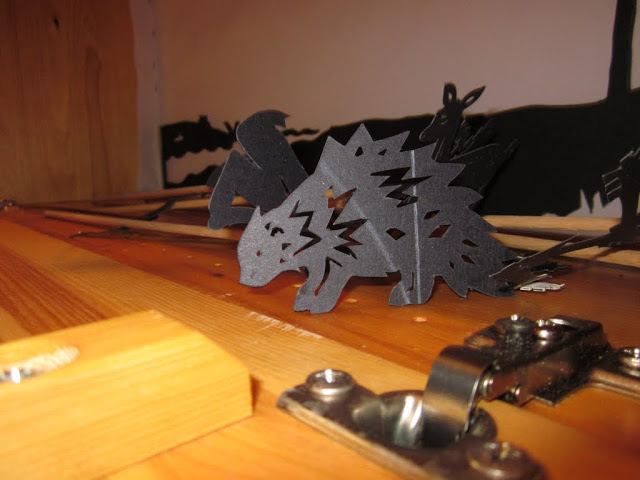
Finished puppets mounted on their rods with velcro, waiting to perform.

Finished puppets mounted on their rods with velcro, waiting to perform.

We experimented with various lights and gels to get different looks and colors on the different lightboxes.

We experimented with various lights and gels to get different looks and colors on the different lightboxes.

The final sets in place, with Coyote looking up at the stars and Bear waiting down on earth.

The final sets in place, with Coyote looking up at the stars and Bear waiting down on earth.

Unicorns & Rainbows

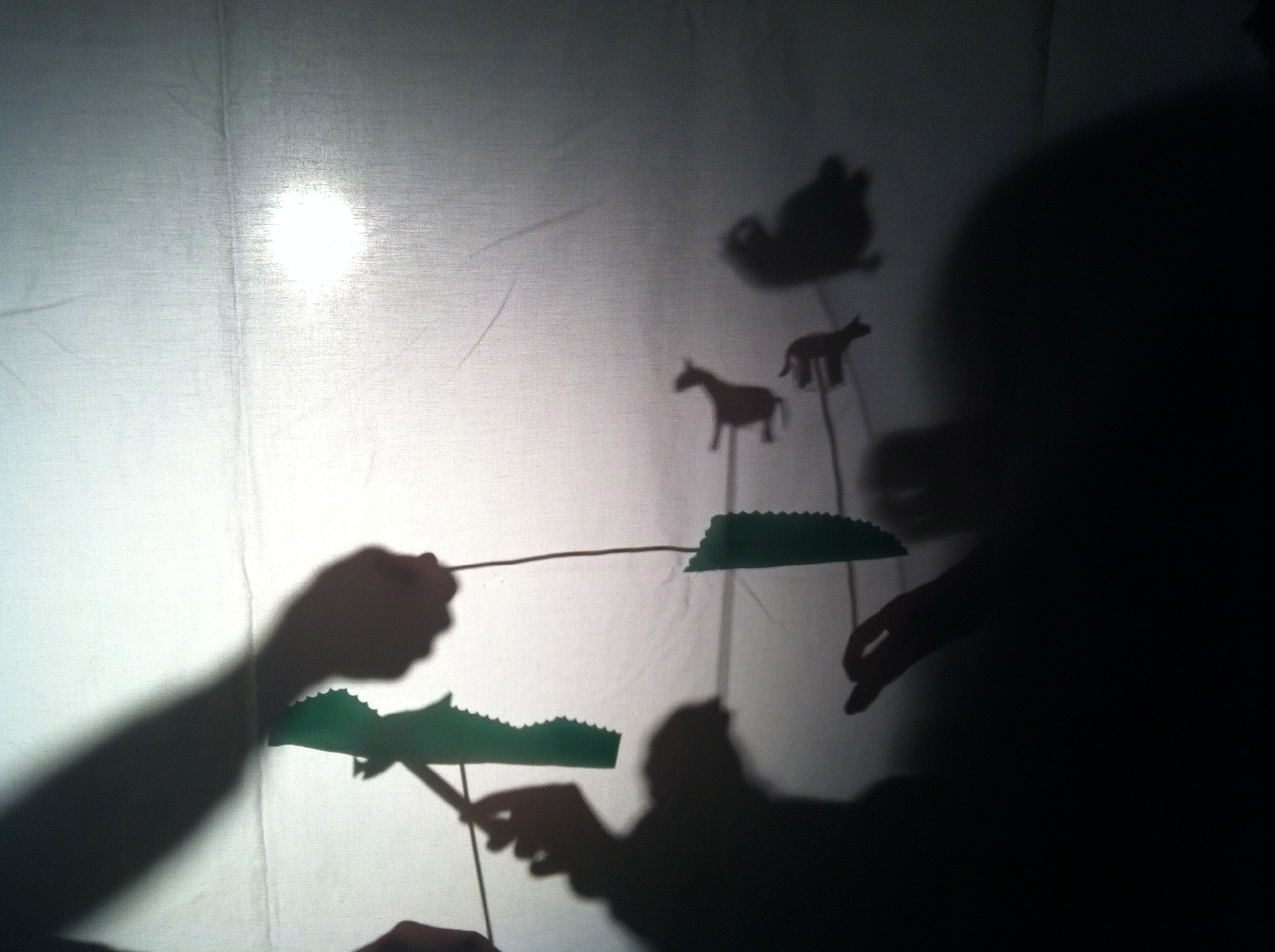
While the performance part of the Smithsonian Shadow Family Night was fun and successful, we had just as much fun working with the many children and their families who came to our table to make shadow puppets and try them out on a simple screen. Shadow puppets are one of the simplest kinds of puppets to make–all you need is some thick paper, scissors, tape and something to be a control rod. We had very small children whose parents cut out their fish or bear puppet and older kids who insisted on doing everything themselves. The screen and lights were enough to keep some participants busy the entire time, as the picture below shows, you really only need your hands and a light to have a good time with a shadow screen!

playingwithscreen

Most kids stuck with the stencils that we provided, and made their own adjustments using scissors to make (among other creatures) a fish with circular scales, a bear with jagged hair or a ‘dolphin-butterfly.’ However, we had two older girls who decided to leap past all of those and instead create unicorns, grass, a huge butterfly and a rainbow, to tell their own stories. We were blown away by their creativity and meticulous attention to detail and remembered once again how perfect puppetry is for letting people accomplish as much as they like through imagination.

The lovely unicorns and green fields designed by workshop participants.

The lovely unicorns and green fields designed by workshop participants.

What DOES a shadow of a rainbow look like?

What DOES a shadow of a rainbow look like?

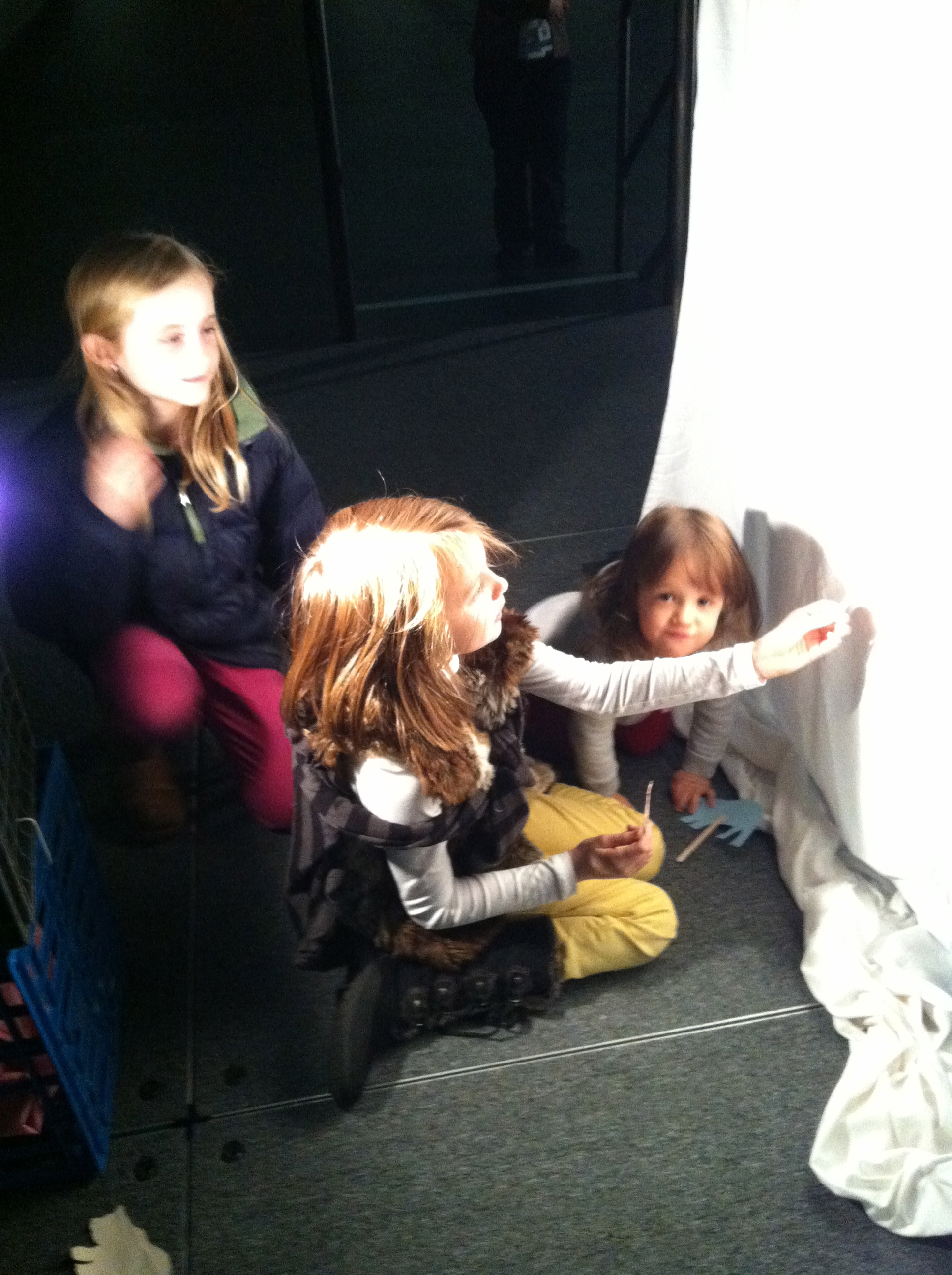
The girls who designed the puppets above, with a young admirer.

The girls who designed the puppets above, with a young admirer.

February Grab Bag

PUPPET STANDUP! See #3 for all info.

PUPPET STANDUP! See #3 for all info.

1. An interview with Shaun Tan that made me slightly less grumpy that I missed his Keynote Address at the SCBWI Winter Conference earlier in the month. Favorite quote: “…we have to make sense of ourselves within a world that can shift and change radically…” That’s the story of Cabinets of Kismet in a nutshell!

2. Basil Twist, who is one of the most well-known contemporary puppeteers in the US, is creating a lobby installation as part of The Rambler by the Joe Good Performance Group. At the American Dance Institute, March 2 and 3; more info here.

3. Standup is a tough business, particularly when you’re a puppet. THIS Saturday, February 23 at 8 & 10pm, come support local puppets in Puppet Standup, a showcase of the best puppet comics working today. Get tickets here and if you use the code GRABBAG, you’ll get 20% off General Admission tickets to the 10pm show! Don’t miss this unique event (no ventriloquists here!) at the Warehouse Theater, 645 New York Ave, NW.

4. If you’re searching for a fun night out this week or next week, look no further than the Mead Theater Lab at Flashpoint and the show Canterbury, produced by our friends at the Pointless Theatre Company.

5. Our friends at Puppets in Prague still have a few spaces left in their March workshops on making marionettes, for anyone lucky enough to be in Prague this spring.

Coyote at the Smithsonian

We had a blast at Shadow Family Night at the Smithsonian American Art Museum on February 1st. Thanks so much to everyone who came, watched our show and made shadow puppets with us! Here are some photos from the night:

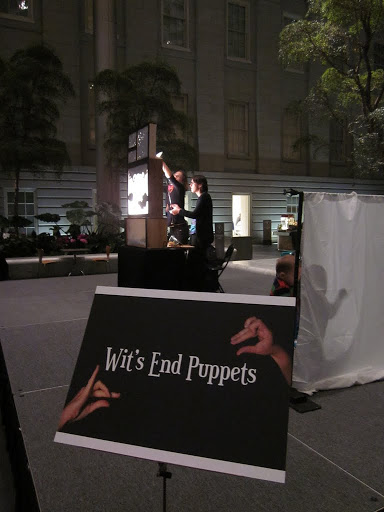
We had so much space in the Kogod Courtyard--and look at our brand-new sign!

We had so much space in the Kogod Courtyard–and look at our brand-new sign!

Our puppet-making table, all set up.

Our puppet-making table, all set up.

A behind the scenes view of our puppet stage.

A behind the scenes view of our puppet stage.

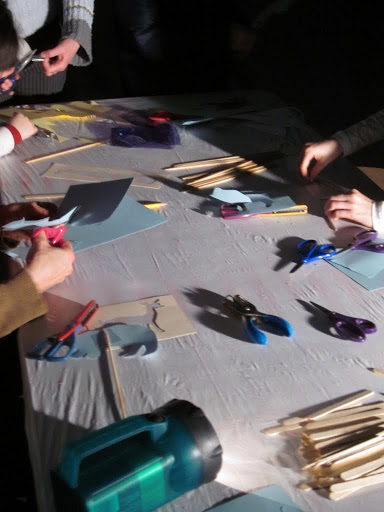
Lots of busy hands cutting out shadow puppets.

Lots of busy hands cutting out shadow puppets.

Cecilia and Genna performing Coyote Places the Stars.

Cecilia and Genna performing Coyote Places the Stars.

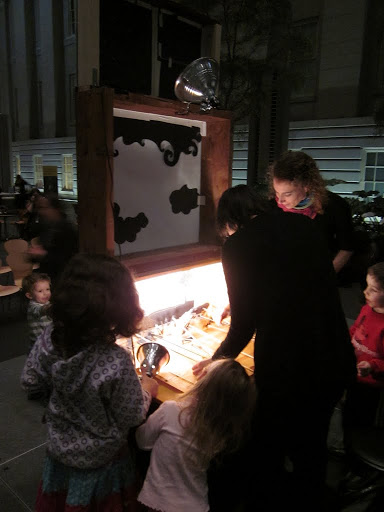
Demonstrating the lights and puppets to our audience.

Demonstrating the lights and puppets to our audience.

Shaun Tan & Paul Klee

The Bird KingIn the introduction to his latest book The Bird King, Shaun Tan quotes the artist Paul Klee, who once said something along the lines of “Drawing is taking a line for a walk.” Klee, if you aren’t familiar with his work, was an Swiss painter who lived from 1879-1940, taught at the Bauhaus school, and was part of the Expressionist and Surrealist movements. I love that Tan references him, because Klee was also interested in puppets. Using a rich combination of color and texture, he created a set of hand puppets for his son, many of which can be seen in these excellent photos on Flickr.

Tan also quotes a second Klee metaphor, imagining the artist “…as a tree, drawing from a rich compost of experience–tihngs seen, read, told and dreamt–in order to grow leaves, flowers and fruit. Art, following the laws of horticulture, can only make something out of something else; artist do not create so much as transform.” Both of these quotations strike me as being entirely appropriate to The Amazing and Marvelous Cabinets of Kismet. Many times during this building process, I feel like I have been ‘taking my materials for a walk’–arranging and rearranging and seeing what shapes and characters emerge. So many of these characters have been created without a real design in mind, that it has felt both terrifying and liberating all at once. As a piece of theater, this is very much an example of Klee’s tree; it is art that draws from many different sources in visual art, story and film, and combines them into something new. This is reflected in the hodge-podge of materials we have been using to create our puppets and set, from paper scraps, to bottle caps to empty wooden spools.

Tan comments in the same introduction that he is often “…wary of using the word ‘inspiration’…” and that “…it sounds too much like a sun shower from the heavens, absorbed by a passive individual enjoying an especially receptive moment.” I understand his hesitation, but for me, inspiration is less like a sun shower and more like a flash of lightning or a moment of recognition; something that makes me go YES. That is TRUE. Now DO something with it. Inspiration for me isn’t passive, it is active, a call to act and create. Tan’s books give me that moment of recognition often; so do Klee’s paintings. I feel so fortunate that I get to spend my time turning the inspiration they give me into my own art.

Mount Pleasant Children’s Puppet Hour

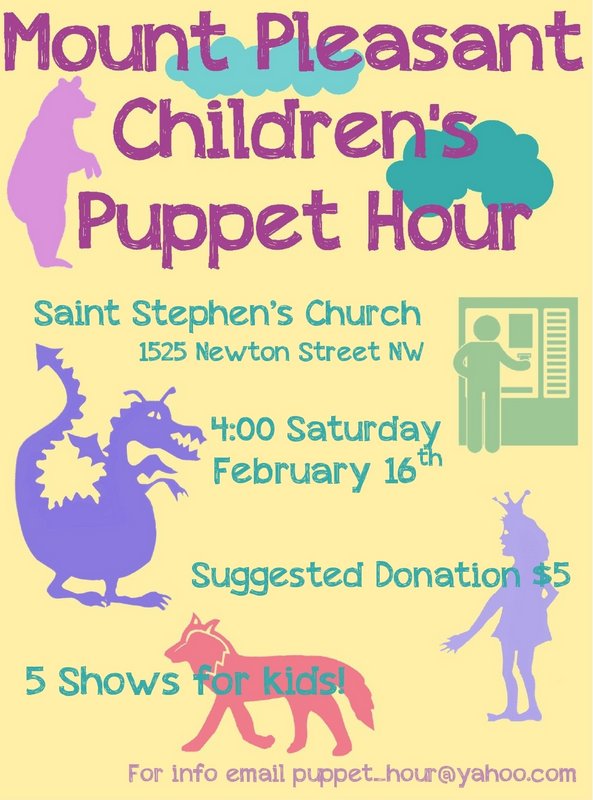
If you missed the world-premiere performance of Coyote Places the Stars at the Smithsonian American Art Museum a few weeks ago, don’t worry. We will be reprising the show (without the workshop) at the semi-annual Mount Pleasant Children’s Puppet Hour, on Saturday February 16, at 4pm. There will be five different puppet shows, as well as live music, taking place at St. Stephen’s Church, 1525 Newton St. NW.  The shows are appropriate for all ages and the suggested donation is $5. We hope to see you there!

Puppet hour poster

Anansi Goes to Potomac

These are some photos from our performance of Anansi’s Appetite at the Potomac Library in Maryland on January 19, 2013. As you can see, we had a great time!

Anansi leaves spider webs of yarn with audience members playing the different animals

Anansi leaves spider webs of yarn with audience members playing the different animals.

Genna Davidson playing Turtle in the story 'Anansi Goes Fishing.'

Genna Davidson playing the hand puppet character Turtle in the story ‘Anansi Goes Fishing.’

Anansi (performed by Cecilia Cackley) tries to trick Turtle into catching fish for him.

Anansi (performed by Cecilia Cackley) tries to trick Turtle into catching fish for him.

Genna performs Granny Annika in the story 'Anansi and the Dancing Granny.'

Genna Davidson performs Granny Annika in the story ‘Anansi and the Dancing Granny.’

Granny dances away from Anansi, who is singing from up above.

Granny dances away from Anansi, who is singing from up above.

Children at the show try out the puppets for themselves after the performance.

Children at the show try out the puppets for themselves after the performance.