Recent Workshops

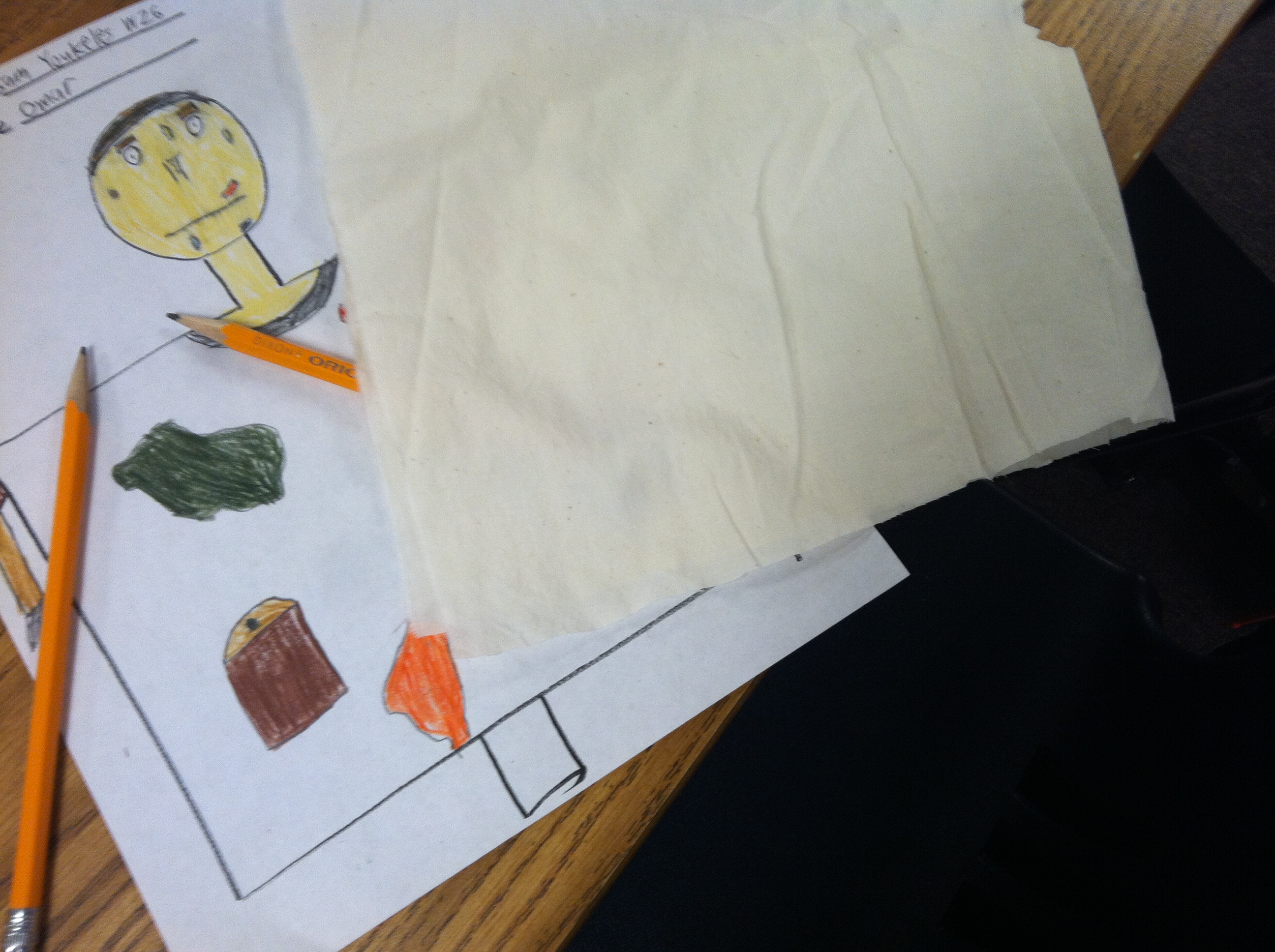
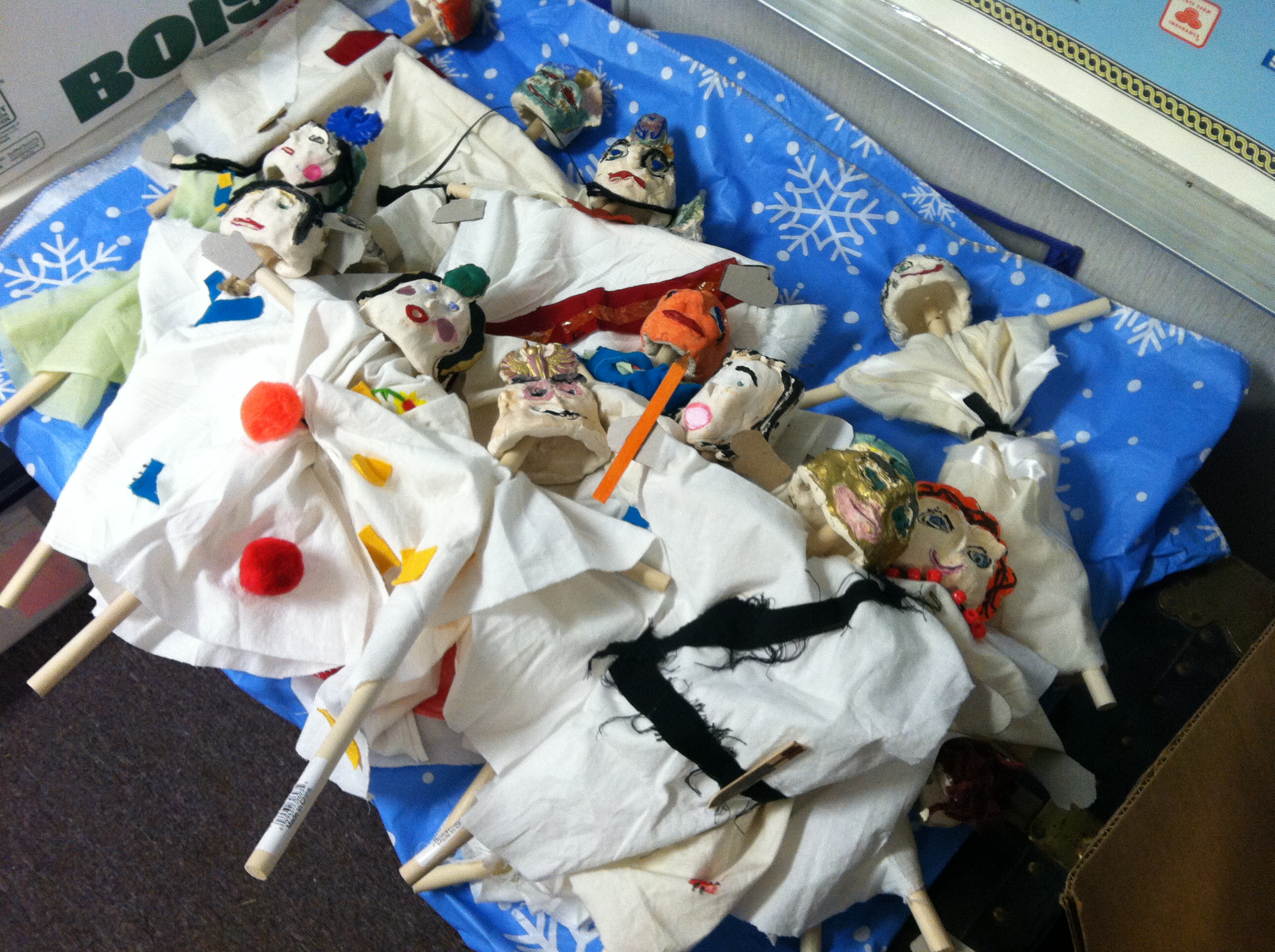
IMG_1653In the past month, we’ve had several different workshops in DC and Virginia, teaching students ages 4-16 to design, build and perform their own puppets. Here are some pictures of what they created. As always, if you are interested in learning more about our workshops or bringing us to your school, check out our Education page.

The photo to the left was taken at the American Immigration Council’s Take Your Child to Work Day event. The puppets below were created in a workshop with the 2nd and 3rd grades at Tuckahoe Elementary School in Arlington, Virginia.

This slideshow requires JavaScript.

Our Folklore Project has a NAME!

Names, as anyone familiar with myth and supernatural creatures will tell you, have great power. So we are beyond excited to be able to announce the name of our next devised theater piece:

MC-title-DKNorthumbria

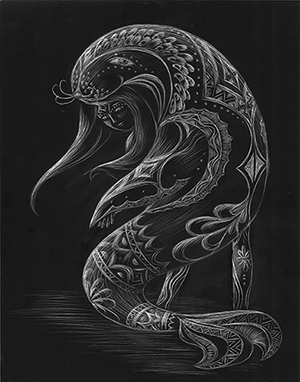
Selkie, artwork by Jordis Brier

Selkie, artwork by Jordis Brier

Inspired by traditional fairy beliefs of the British Isles, we are creating puppets of various malevolent creatures based on designs by artists from across the US and beyond. We will be inviting audiences to interact with supernatural creatures of legend and mythology in the spirit of a choose-your-own-adventure book.

Follow this blog (or Facebook and Twitter) for more updates and mark your calendars for our work-in-progress showing on June 26 & 27 at GALA Hispanic Theatre!

Building a Puppet Ballet: Interview with Genna Davidson

This week, our managing director Patricia Germann spoke with Wit’s End artist Genna Davidson about her recent work constructing puppets for Pointless Theatre Company’s newest show, Sleeping Beauty: A Puppet Ballet, which is currently running as part of CulturalDC’s Mead Theatre Lab program.

Patricia Germann:  What puppets did you work on?

Genna Davidson:  I primarily worked on Sleeping Beauty, the Prince, and the Witch who turns into a dragon.  I worked on all of them, actually, but those are the primary ones.

Puppets in rehearsal. Photo by Genna Davidson.

Puppets in rehearsal. Photo by Genna Davidson.

PG: I recall that Pointless did a version of Sleeping Beauty before. Did they learn lessons from the last production, in terms of how they wanted them to move, or how they wanted them to be built?

GD: They needed the puppets to be way lighter.  Because for the first production of the show they had made them all out of papier-mâché and wood; they were super heavy.  They also wanted the puppets to have a lot of flexibility – but not limitless flexibility, because that makes them hard to control.  So I contributed the bodies, the structures, the new innards and forms of the puppets focusing on building with lighter materials.

PG: You had told me before that the company went to ballet classes.  Did that experience affect how you were building the puppets, or modifying them during the rehearsal process? 

GD: One thing we learned is that these puppets – because it’s ballet – they stand mostly in turnout. When I made the Prince, I made his legs with feet and knees pointed forward. At some point, we realized this means the puppeteer has to always be turning the feet out.  It would be much easier to just have them built in turnout, and then the puppeteer can turn them in as needed, which is almost never.  So I adjusted them on the Prince, and then when I made Sleeping Beauty, I made her legs in turnout. 

Sleeping Beauty in performance. Photo by Gene Carl Feldman.

Sleeping Beauty in performance. Photo by Gene Carl Feldman.

PG: Were the puppets pretty durable?  I’m thinking back to our own experiences with having to repair puppets over a run.

GD: From every project that we do, I learn more and more.  I’ve been very happy with some of the joints of these puppets, in particular the ones which I chose to make elastic from the get-go because of wanting to allow the puppeteers to extend through the ballet movements and then settle back; more breath.  So at important junctures, they have thick fabric-covered elastic joints.

Their spines are really cool. They’re made out of dishwasher drainer hose, which is connected to PVC with hose clamps and plumbing parts.  So there’s lots of plumbing inside!  The drainer hose allows for lots of flexibility, so that the spine can actually arch backwards and forwards.

I had to rig the head in such a way to allow for rotation to the right and left independent of the neck which can only get easy movement arching forward and backward.  Imagine a wooden dowel coming out of the  bottom of the head and inserting within a hollow cylinder, the spine. The heads can spin 360 degrees, but the reason that the head is staying inside of…or one part of the neck is staying inside the other part of the neck…is that I ran a piece of elastic along the outside of the spine all the way underneath the pelvis of the puppet and back up again to that dowel coming out of the head.  And that has been – knock on wood – really pretty durable.

PG: We haven’t really talked about the witch-to-dragon transformation.

GD: Basically you have to see it to understand it and I don’t want to give it away.

PG: Did they have a design for that going in, or did you come up with that transformation?

GD: No, I came up with the design.

The witch, built by Genna. Photo by Gene Carl Feldman.

The witch, built by Genna. Photo by Gene Carl Feldman.

PG: Wow, that’s really cool.

GD: Yeah, that one in particular was my feat of magic – but I wish we had had more time to rehearse the transformation.  It took me so long to construct that we were basically in tech and didn’t have long to choreograph it. [The transformation] works well, but I would have liked to suggest some other choreographed movement.  For a couple days, we were worried we’d have to cut the transformation onstage and leave it to happen offstage, which would have been really disappointing.

The one thing we couldn’t make happen was her face turning into a dragon.  We ended up just bringing on this mask and putting it on her face, basically.  It’s done in a way that works, but we had wanted to have the mask incorporated somehow into her as a witch, so that when the transformation happens, it would be like, “Oh, it was there the whole time!”  That was something we had to let go.

I do want to mention Kyra Corradin, who did the sculpting of all the heads.  Even the puppets who were primarily mine in body, she did those heads, and they’re really beautiful.

PG: You were telling me earlier about the challenges of trying to fit a controller into a head that was already built.

GD: Kyra had built these heads and made them hollow because it would make them lighter…but because she has built these kinds of puppets before, she didn’t think about how to build the head control mechanisms into the puppets.  But actually it worked out well because these heads are really well shaped, beautiful and completely hollow. Though it was tricky to get the mechanisms inside and not damage the sculptural work, it was worth it.  If we had had to build the head around the control mechanism, I’m not sure we would have been able to achieve that hollow, light head that she created. So not knowing is a benefit sometimes.

Pointless Theatre Company’s Sleeping Beauty: A Puppet Ballet runs through May 3, 2014, at the Mead Theatre Lab at Flashpoint.  For tickets and more information, visit www.culturaldc.org

This interview was edited for length and clarity.

March Grab Bag

See #3.

See #3.

1. Creature Shop Challenge!  We’ve had reality shows about losing weight and finding romantic partners–why not about building puppets? Syfy channel has created a show where ten designers compete for a job at the Jim Henson Creature Shop. It airs on Tuesdays at 10pm, but you can also watch the episodes online. I haven’t seen it yet but I’m hoping to get some building ideas from watching what they come up with.

2. A theatrical version of Miyazaki’s film Princess Mononoke from 2013 that uses puppets made from recycled materials. Seriously, there’s absolutely nothing you can’t love about that sentence. This show is currently in a Research and Development stage again, so maybe there will be more opportunities to see it in the future!  From the UK company Whole Hog Theatre. 

3. The World Stages Festival has been amazing and inspiring and we will be writing more about the performances we saw soon. If you can, stop by the Kennedy Center before the end of the weekend and see the fantastic puppet installations.

4.The Manipulate Festival is an annual celebration of visual theater in the UK that encourages visitors to ‘leave preconceptions at the door.’ Here’s an article highlighting several productions this year that included puppetry.

5.Muppets Most Wanted needs no explanation. A new feature length film with Kermit & Co–what are you waiting for? Go see it!

Puppets and Social Studies

I was thrilled to be able to return this month to Tuckahoe Elementary, where I used to teach full time, to do a three session arts residency with the 5th grade. Their social studies curriculum covers various world cultures, and I collaborated with their classroom, library and art teachers to give the students the opportunity to delve more deeply into Ancient Egyptian society through research, writing and puppetry.

A puppet plan waiting to be turned into the costume using fabric, markers and glue.

A  plan waiting to be turned into a puppet   costume using fabric, markers and glue.

Each student was assigned a particular Ancient Egyptian social group and  spent time in the library researching the work, lifestyle, dress and family structure of that group. I then led each class through the steps of creating a puppet character and writing a monologue for them to speak, focusing on the hopes and dreams of their particular person. Some students chose to go dramatic, with generals plotting to kill the pharaoh. Others wrote about characters wishing to move up in status or social group. The students demonstrated their knowledge about the time period and their social group through the details they included in their writing.

Completed puppets, waiting for the big performance.

Completed puppets, waiting for the big performance.

In art class, each student created a ceramic head for their puppet, which was fired and decorated. In social studies class with me, they designed and then built a basic rod puppet structure of dowels and a costume of fabric. Again, students were expected to use their research to create a costume and if possible, props for their particular puppet character. When the puppets were all assembled, the students each performed their puppet monologue for the group. They did a wonderful job! Among the comments and feedback we got from the students were “I liked getting to decide how my character reacted to things,” “I liked learning more about all the different social groups by watching everyone” and “I liked making the head and costume of my puppet!” proving that the arts are the perfect way to build a love of learning in students of all ages.  If you would like us to bring this or a similar workshop to your classroom, please email us at witsendpuppets@gmail.com.

This slideshow requires JavaScript.

Flowers and Ladders and Frogs, OH MY!

Rehearsals for Under the Canopy start today! In the midst of the snow last week, we got to set up some of the ladders and other objects in the Athenaeum to see how they look. It was a little odd creating a tropical rainforest in the midst of snowflakes! Here are some photos, and you can buy tickets for the show HERE. We hope to see you there!

This slideshow requires JavaScript.

So Much COLOR

Under the Canopy is going to be a very colorful show. Can you guess what each of these photos is a close-up of? There’s a slide show of the final objects (as they look right now, things could still change!) at the end.

1. IMG_1328IMG_13292.IMG_13313.IMG_1330 4.IMG_13325.
IMG_1334

This slideshow requires JavaScript.

Favorite Tool: Watercolor Pencils

IMG_1285I haven’t done one of these posts in awhile! For both our children’s shows this year, we were very specific about colors and having the right shades for each story and environment. Much of the time, our initial sketches and planning for puppets is done quickly with a basic pencil and paper, but lately Genna and Amy have been adding color with these watercolor pencils.

IMG_1286

What makes these different from regular colored pencils is the way you can brush over your picture with water to blend colors and create a smooth shade. We don’t always do that, but the colors add a lot to our puppet sketches, as you can see here.

IMG_1287

Building Under the Canopy

We’re in the midst of refurbishing old objects and building new ones for Under the Canopy, which Arts on the Horizon will produce in February. After a workshop production last summer, we learned a LOT about how babies respond to objects and what kinds of things capture their attention best. Here are a few photos of us at work as we build umbrella birds and caterpillars, ladder trees and butterflies.

Supplies waiting on the worktable.

Supplies waiting on the worktable.

Pieces for the umbrella bird, waiting to be glued on.

Pieces for the umbrella bird, all cut out and waiting to be glued on.

All glued or sewn on, now waiting for bird tails.

All glued or sewn on, now waiting for bird tails.

Amy and Genna at the worktable.

Amy and Genna at the worktable.

Genna trying out placements for the bird tails.

Genna trying out placements for the bird tails.

Building Fabulas Mayas

We’ve been hard at work building lots and lots of puppets for our show Fabulas Mayas, which opens next week at GALA Hispanic Theatre. Here are a few pictures of the process:

Lots of paper mache mice waiting to be painted.

Lots of paper mache mice waiting to be painted.

IMG_1117

Snail’s base, getting a first coat of paint from Genna.

IMG_1081

There are SO MANY shadow puppets in this show.

IMG_1107

The head of a child puppet, waiting for hair.