From the Rehearsal Room #2

We have four weeks until The Amazing and Marvelous Cabinets of Kismet opens. Tickets are on sale now and we are excited about the story that is coming to life! Here are some recent pictures of rehearsals, all taken by Sarah Gingold.

Mophead and KismetGenna and Heather


Lightbulb


What Can You Do With a Broken Umbrella?

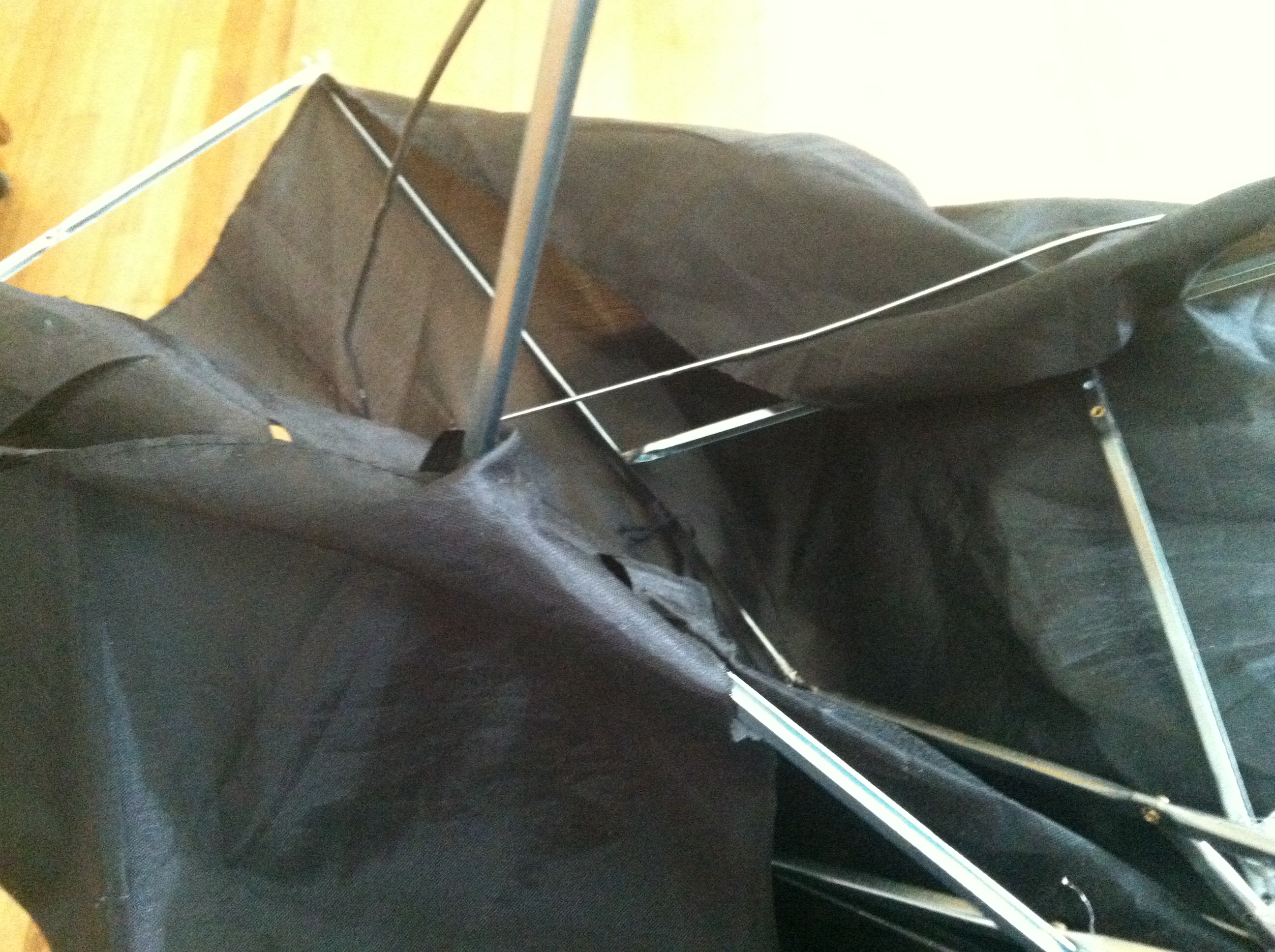
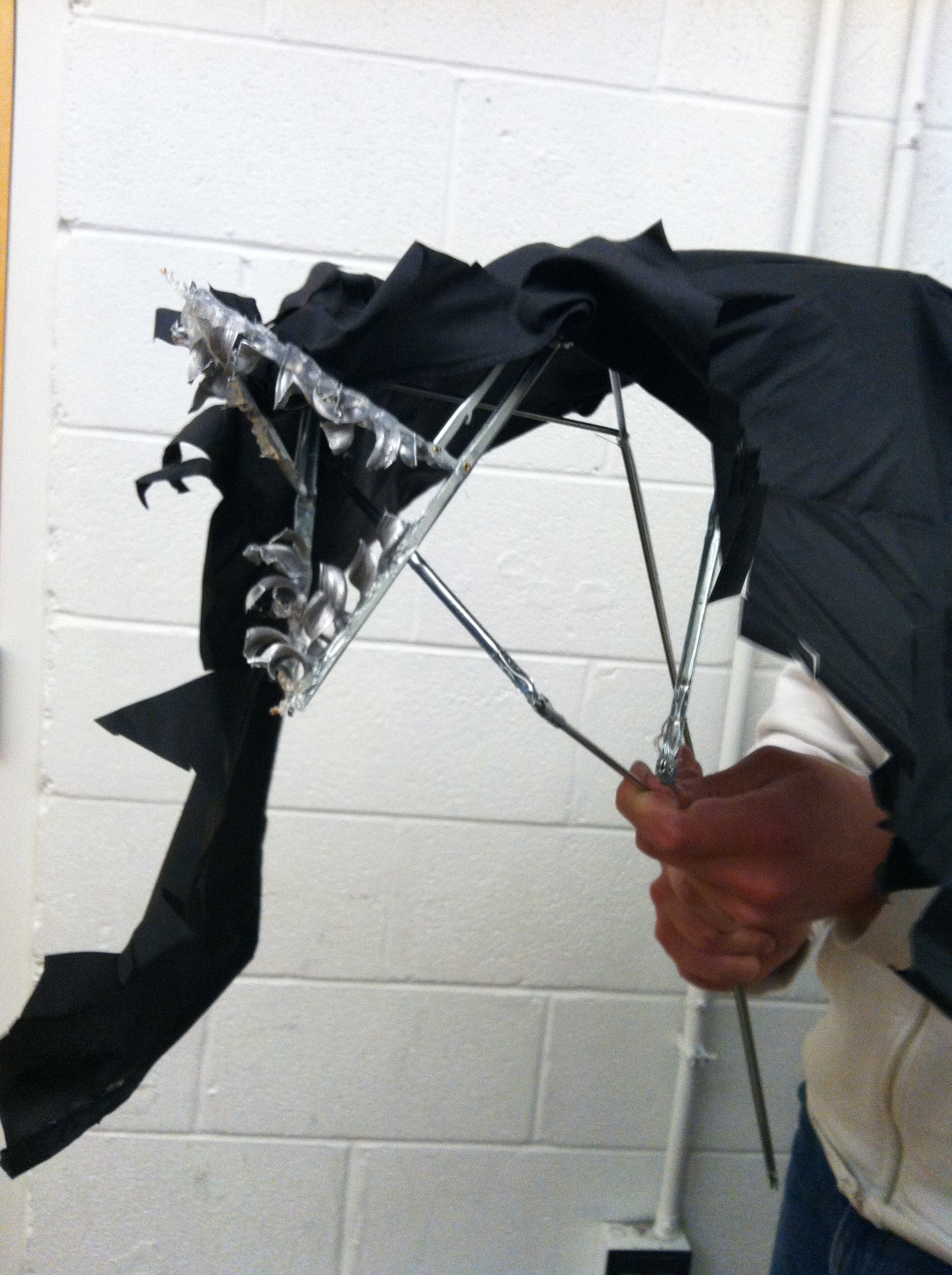
So many things, if you are a puppeteer! After taking apart LOTS of umbrellas for various puppet projects this winter, we have a much better understanding of how they work–and why they break so easily! Fortunately we can use the broken pieces in many different ways. Here are a few of them:

We take large broken umbrellas apart and use the spokes as controls for shadow puppets.

We take large broken umbrellas apart and use the spokes as controls for shadow puppets.

An in-progress shot of a puppet from Cabinets of Kismet that uses the joints of a broken umbrella.

An in-progress shot of a puppet from Cabinets of Kismet that uses the joints of a broken umbrella.

And here it is again a little further along!

And here it is again a little further along!


March Grab Bag

See item #3.

See item #2.

This month’s grab bag has a decidedly paperish theme, perhaps because we spent so much time building paper puppets at the beginning of the month. Here are some videos, artists and events that caught my eye:

1. Artist Irving Harper is profiled on the website Etsy; take a look at his amazing paper creations!

2. The animated short Paperman by Disney won an Academy Award, proving that paper airplanes are the route you should take to find love! This is the same award won by Shaun Tan in 2010 for his short based on the picture book The Lost Thing. See the trailer for Paperman here.

3. Another spectacular combination of paper and video is the music video of this song by Josh Ritter. 12,000 pieces of construction paper were used!

4. Richard Sweeney is an artist from the UK whose paper sculptures have greatly influenced our designs for the environment and creatures for Paper World. You can take a look at his amazing creations on his Flickr page.

5. We were excited to see the dates announced for Figment DC 2013! After our fantastic experience last year, which you can read about in this blog post, we are starting to think about what we can offer audiences at this year’s event. Maybe it will involve paper! Who knows?

Under the (Artistic) Influence

A shadow box by Joseph Cornell.

A shadow box by Joseph Cornell.

Shaun Tan is clearly our biggest influence in creating The Amazing and Marvelous Cabinets of Kismet. However, now that we have been working on this story and these characters for a year and a half, we are recognizing other artistic influences that have lingered in our minds and imaginations. Here are a few of them:

Joseph Cornell: Mainly an influence on me and Nikki; Genna doesn’t particularly like Cornell. For me though, his boxes evoke cabinets, the building blocks for Kismet’s world. His combinations of paper scraps, photographs and found objects are by turns whimsical, lonely, mysterious and chaotic, all moods that I hope to evoke at one point or another in Cabinets of Kismet. 

One of the dresses that inspired Genna.

One of the dresses that inspired Genna.

Alexander McQueen: When we first started discussing this story and the aesthetic we were hoping to create, everyone brought in art books and catalogues to page through, in hopes of discovering images that would inspire the look or sensibility of a puppet. I had the exhibit catalogue for Alexander McQueen: Savage Beauty lying around and Genna was inspired by several of the outfits pictured. His use of materials such as animal bones and skulls as well as layers of translucent fabric is echoed in a couple of Genna’s puppets use similar treatments. She says she was drawn to McQueen’s work because “…I like the gothic and the macabre. I find darkness to be fascinating.” Look for puppets with those qualities when you come to see Cabinets of Kismet!

Figures by Kandinsky.

Figures by Kandinsky.

Wassily Kandinsky: By the time we started re-thinking Paper World this winter, the look had moved further away from reality and into the realm of the abstract. I started looking at the shapes in paper cutouts by Matisse, but soon focused on the work of Kandinsky. While his work is much more colorful than, well, anything really in Paper World, his lines and shapes have an energy and rhythm to them that I hope to emulate in the shadow puppets that appear and disappear in our show. Keep an eye out for similar creatures when you come see Cabinets of Kismet in April!

Upcoming Library Shows

Genna performs Granny Annika in 'Anansi and the Dancing Granny.'

Genna performs Granny Annika in ‘Anansi and the Dancing Granny.’

Just a quick note to say that if you haven’t seen our show Anansi’s Appetite, we will be performing at two local libraries in the coming weeks. This is an interactive show suitable for ages 2 and up, and is great for families to enjoy together!

March 23, 2013 10:30am at Rockville Memorial Library

April 6, 2013 11:00am at Bethesda Library

We hope to see you there!

Puppets and Problem Solving

How do you turn a cardboard tube into a bird? Into a man?

How do you turn a cardboard tube into a bird? Into a man?

It was great to see the latest Education issue of The Washington Post Magazine devoted to arts education, with a lead article by Anne Midgette. I found it encouraging to read about the many efforts by various arts organizations to bring their work to students, either during the regular school day or through after-school programs, especially because education is such a big part of what I am trying to do with this company. Midgette brings up some great points in the article and a later addendum, among them the value of arts as a motivator for students who struggle academically, as a means of teaching focus and the struggle for some organizations to balance creating art with teaching. I had some further thoughts on the value of puppetry in arts education, and specifically the challenge of teaching problem solving.

Problem solving is a huge part of learning and it can be an incredibly frustrating skill to learn, especially for younger students. Authentic problem solving is the sort of skill that easily gets pushed to the side in favor of memorization and rote drill when the classroom culture is based around standardized tests, as I know from personal experience. However, this only makes things harder for kids when they are asked to make decisions on their own. When you are used to every task having a specific answer and every assignment needing to be done ‘right,’ facing an activity without a certain set of steps and no guarantees can be intimidating.  Students are used to the answer being in the back of the book or in their teacher’s head. But what if your teacher doesn’t know the answer? What if no one does?

Puppets require lots of problem solving and there is no ‘right’ answer to be found–only what works for you and what looks right to your eyes as the artist. How can you make your puppet walk? Which yarn is the best hair? Does your puppet have arms or legs? Puppetry is an ideal low-cost way to introduce students to the concept of making decisions and solving problems. After all, even if math problems and grammar rules have set answers, not everything in life is laid out in perfect patterns and students need to learn to make decisions that are best for them. Why not give them the opportunity to problem solve with a puppet, rather than waiting until they are so set on getting everything perfect that one challenging task reduces them to tears? Flexibility and creativity are skills that are important and I hope that as Wit’s End Puppets continues to grow as a company, we will have the opportunity to encourage them in many more students.

From the Rehearsal Room #1

Rehearsals this month have been taken up with some strength conditioning (puppetry can be strenuous!), lots of experimenting with puppets, discussing the storyboard and story elements in detail and some puppet building. We will be sharing more insights into the process (including interviews with our cast, video and more) but here are some photos of early meetings in February:

Amy and Genna's puppets encounter each other.

Amy and Genna’s puppets encounter each other.

Russell, working with the Swirl Dancer puppet.

Russell, working with the Swirl Dancer puppet.