July Grab Bag

A roundup of articles, photos and events that we highlighted on Twitter this month. 

A hand puppet created by a student.

A hand puppet created by a student.

1. A fantastic article about the importance of arts education is here. Obviously, we agree!

2. Puppetry is an ancient art, but its prevalence in some parts of the world is changing rapidly. Read about traditional Indian puppetry and how it is changing here.

3. A tribute to British marionette master Frank Mumford is here.

4.Double Edge Theater up in Massachusetts is performing Sharazad this summer. Find out more about this fantastic theater in this article.

5.  These pictures of giant puppets make us wish we could see this production of The Magic Flute at the Bregenz Festival.

Top 5 Reactions to the Word ‘Puppet’

Puppets are not for the faint of heart.

Puppets are not for the faint of heart.                Photo by Patricia Germann.

We discovered over the course of Malevolent Creatures rehearsals that we’ve all gotten pretty similar reactions when the word ‘puppet’ comes up in ordinary conversation. Here are the top five comments we’re used to hearing. Have you made one or more of them when meeting a puppeteer?

1. “Oh like the Muppets!” Well, um, not always. In fact, we’ve never created a show with hand-and-rod style puppets before, although we’re in the planning stages for one with GALA Hispanic Theatre.

2. “So you do stuff like on Sesame Street!” No, not really. Not too much counting or alphabet songs in our shows. Not all puppets are intended for children, despite the ubiquity of Big Bird and Bert and Ernie in our culture.

3. “Um…like Pinnochio?” Aside from Jim Henson, this is probably the only other named puppet character that most people can come up with.

4. “How cute!” Yes, very….until the puppet starts to go on a rampage and eat the audience. Wait, what? Oh right. NOT ALL PUPPETS ARE FOR CHILDREN. OR SQUEAMISH ADULTS.

5. “Is that a real job?” As a matter of fact, it is! Aren’t we lucky?

Puppets Like Football Too!

Rehearsal puppet put together and strung on a control!

Rehearsal puppet put together and strung on a control!

I created this rehearsal puppet for Malevolent Creatures about a month ago, with no idea that he would become such a fun tool for improvisation. Throughout our rehearsals, whenever there was a break, someone would pick him up, give him a funny voice and start a conversation. Eventually we decided that (outside of the world of the play) he was French. And since the World Cup is in full swing, it was inevitable that the puppet would get pulled into our many arguments about who was going to win the day’s games. Clearly, puppets love football just as much as people. Here is a short video of our puppet explaining his views, as performed by Elizabeth Dapo.

June Grab Bag

A roundup of articles, videos and more that we highlighted on Twitter this month. 

A new book from Ashley Bryan. See #3.

A new book from Ashley Bryan.     See #2.

1. Paul McCartney. And a robot puppet. Dancing together in this video. Need I say more?

2. Children’s author Ashley Bryan makes puppets from found objects washed up on the beach near his home on Little Cranberry Island, Maine. Read this interview from Publisher’s Weekly about his new book of puppets coming out this summer.

3. ADORABLE tabletop puppetry is featured in the production Moominsummer Madness from Polka Theatre in London. Based on the stories of legendary author Tove Jansson, you should definitely check this out if you are in the UK.

4. A gallery of Drabbits from the fabulous Imaginarium Galleries in Pennsylvania.

5. I think it’s safe to say that Julie Taymor’s work on Disney’s The Lion King was the first glimpse many people had of non-Sesame Street puppets. It’s coming back to the Kennedy Center this summer.

A Quick Guide to Puppets

Curious about puppets? Looking for some basic information about how to tell what kind of a puppet you might be looking at? You’ve come to the right place. Puppets are quickly gaining exposure in our popular culture, but they belong to a very old tradition, and are just as diverse as many other art forms. Here are some basics to know:

The definition of ‘puppet’ can be slightly different depending on who you talk to. Most people picture the fabric toy puppets they might have had as children, or the Muppet characters created by Jim Henson for Sesame Street. We often say that a puppet is any object brought to life by an operator, a definition which includes both realistic and abstract characters.

A hand puppet created by a student.

A hand puppet created by a student.

Hand puppets are puppets operated by the puppeteers hand inside the puppet’s body, usually making the head and hands move. Punch and Judy are good examples of traditional hand puppets. Sometimes a hand puppet is operated by two people, such as Telly Monster from Sesame Street.

Rod puppets are puppets with a rod holding up the body and usually two rods controlling the hands or arms. This allows the puppeteer to put some distance between themselves and the puppet. They are traditionally found in southeast Asia, primarily Indonesia.

Czech style marionette.

Czech style marionette.

Marionettes are puppets controlled by strings or wires. A good example of marionettes are the puppets in the movie The Sound of Music. Some marionettes can have up to a dozen strings controlling all the different parts of the body. Marionettes are usually human figures but can also be animals or abstract figures.

Over-life-size puppets is the term used by puppet historian John Bell to describe puppets that are larger than human size or enclose the puppeteer inside the puppet. Big Bird, from Sesame Street is an example of this kind of puppet.

Shadow puppets that we created for Fabulas Mayas at GALA Hispanic Theatre.

Shadow puppets that we created for Fabulas Mayas at GALA Hispanic Theatre.

Shadow puppets are flat cutout figures traditionally seen in silhouette, behind a screen. They can be made of paper, plastic, or leather and are sometimes opaque and sometimes translucent.

Object puppet is a term we sometimes use to describe characters that are created from found objects. All puppets can be classified as ‘object theater’ but these are characters made from a single object such as a hairbrush, fork or pair of binoculars.

Bunraku is a style of puppet originally from Japan. They are usually half or three quarters of human size and are operated by three puppeteers at once.

May Grab Bag

A roundup of articles and more that we highlighted on Twitter this month

Czech style marionette carved by Cecilia in one of Mirek's classes.

Czech style marionette carved by Cecilia in one of Mirek’s classes. See #1

1. A great article with even more awesome photos about our friend Mirek Trejtnar who runs the Puppets in Prague marionette-building workshops. Read it if you’ve ever been curious about how to make a marionette.

2. Some advice from Jim Henson, rendered in brilliant comic form by Gavin Aung Than. Read it for inspiration–we keep it handy in the studio for when motivation is needed!

3. Genna discovered this article about an artist performing with puppets in the New York subway. I don’t think I’ve ever seen anyone perform with a puppet in the DC metro–have you?

4. An article and video from Sandglass Theater of Vermont about their recent experiences performing in Cuba. Their work is a huge inspiration to us and well worth a look.

5. NPR has a weekly podcast called Pop Culture Happy Hour and recently one of the discussion topics was fairy tales. It’s not exactly the kind of stories we’re working with for Malevolent Creatures but still interesting and fun to listen to.

Malevolent Creatures Research

mythThere have been two main categories of research for Malevolent Creatures. First is the folklore itself: stories, traditions, rituals and beliefs from the British Isles that center around fairies and other supernatural creatures. The second is how those beliefs fit together, how they have changed over the years and the various theories about where they came from and the meanings behind them.

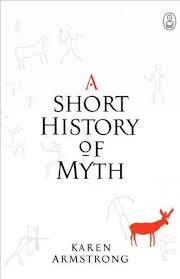
One of my favorite pieces of reading has been Karen Armstrong’s book A Short History of Myth, which traces the evolution of mythology from the Paleolithic period to the present day. In considering the place of mythology in our world Armstrong writes that “The imagination is the faculty that produces religion and mythology…the imagination is also the faculty that has enabled scientists to bring new knowledge to light.” She also points out that “…like science and technology, mythology…is not about opting out of this world but about enabling us to live more intensely within it.”

MCResearchThat intensity is evident in nearly all of the individual stories and beliefs we discovered and is one of the reasons they have been retold and appropriated over and over; by poets, by scholars and by writers of literature for all ages. I am personally very interested in how fairy stories have been rewritten by authors of young adult and children’s literature and one of the pleasures of this research process for me is that it has given me an excuse to re-read some old favorite children’s books that incorporate British and Celtic myth. If you are interested in British folklore but maybe don’t feel like getting into the heavy academic side of things, I recommend these titles as both fun and worthwhile.

The Weirdstone of Brisingamen by Alan Garner

The Dark is Rising (series) by Susan Cooper

The Moorchild by Eloise Jarvis McGraw

The Hounds of the Morrigan by Pat O’Shea

Puppet Reality TV

syfyI finally found the time to sit down and watch the first episode of Jim Henson’s Creature Shop Challenge online. Here are some thoughts:

The format seems pretty standard for a reality show. The ten contestants are given a challenge and put in teams, they have two days to design and build the creature; then there is a screen test after which they explain a little bit about their work. The panel of three judges gives feedback, selects one winner and sends one contestant home. Because this was the pilot episode, most of the talking heads and short interviews focused on the contestant’s backgrounds, contrasting those who were freelancers with those who worked for established studios, people who were used to fancy tools and materials vs. those who usually built with tinfoil and hot glue. There wasn’t always the greatest balance between a focus on the working relationships of the teams vs. a focus on the challenge in the work itself.

My favorite parts were the clips of the teams working in the studio (except when there would be these strange little freeze frames that happened every couple of minutes, which were annoying) and the discussion among the judges after the screen tests. While the clips of in progress work were fairly brief, they did give a sense of the tools and materials used and I’m guessing that later episodes get more complicated with the use of cables and animatronics, etc. Overall, I don’t think I’m the best audience for this show, just because I’m not a huge fan of the format. Competition stresses me out and I’m much more interested in the working process than the tensions between teammates. However, for someone interested in a behind the scenes glimpse of how fantastic creatures are created for television and movies, this is a worthwhile show to check out.

April Grab Bag

A round-up of articles and events we’ve highlighted on Twitter this month. 

Sleeping Beauty in performance. Photo by Gene Carl Feldman.

Sleeping Beauty in performance. Photo by Gene Carl Feldman.

1. Pointless Theatre’s production of Sleeping Beauty: a puppet ballet has only one more weekend to run! You’ll be sorry if you miss it.

2. Elizabeth Hyde Stevens wrote this article for Salon about the Muppets and how they created Generation X.

3. A group of Argentine puppeteers is seeking participants for a convention of women puppeteers from around the world, to be held in Argentina this coming November. Stated goals for the convention include discussion about the messages of shows, the space we occupy, who we reach with our art and how we can help each other. If you are interested in participating or simply learning more, you can email convenciondetitiriteras@gmail.com

4. Poncili Creacion was in town for one night this month. Find out more about the work of this Puerto Rican theater company that creates surreal puppetry on their tumblr.

5. We were fortunate enough to see Ronnie Burkett’s amazing marionette show Penny Plain at the Kennedy Center (more of our thoughts here). For those interested in learning more about Burkett’s work, here’s an old interview from The Guardian.

6. Our favorite illustrator and key inspiration Shaun Tan has a new book out! It’s called Rules of Summer, read more about it on his website here.

A Midsummer Night’s Dream & Penny Plain

worldBoth of these shows were presented as part of the Kennedy Center’s World Stages Festival in March 2014. 

A Midsummer Night’s Dream, Bristol Old Vic with puppets by Handspring Puppet Company.

Perhaps as a result of their collaboration with Handspring, Bristol Old Vic presented a version of Dream that connected the characters and their story to objects, humble materials and craftsmanship. The set was an immediate hint that this was not going to be your usual, run-of-the-mill Shakespeare production. Ladders, stools, lattice and paint drops gave the feeling of being in a workshop, and one actor wandered about onstage handling wood and tools with ease.The costumes were rough work clothes, with few differences between the mechanicals and the nobles, while the actors playing Oberon and Titania carried large sculpted masks and in Oberon’s case an oversized jointed hand. The mechanicals used large blocks of wood as props in their rehearsal, which by the final performance of Pyramus and Thisbe had been carved into rough representations of the doomed lovers. Even the woods of Athens were displayed literally–the actors held up planks of wood for the lovers to hide behind and travel through during their scenes.

In keeping with the rough aesthetic, the puppets used for Puck and the other fairies were somewhat motley in style and appearance. Puck was played by three of the mechanicals, each holding a different object (mallet, fork, metal can, etc) that they brought together to form the head, body and appendages of the character. The exact setup might be different each time, but the hobgoblin could move like lightning simply by having all the objects zoom off in different directions, which was very effective whenever Oberon called for his servant. Peaseblossm and company were slightly more grotesque, with exaggerated features and only one or two body parts made from objects similar to Puck. Bottom’s transformation, like the woods of Athens, took Shakespeare’s text quite literally, with an over-the-top visual gag that the actor pulled off with aplomb. The transformation mechanism, along with fully realized versions of Oberon and Titania used in the final dance, were the only puppets that seemed to be created in a woven cane style similar to the War Horse puppets.

There was one small mystery: in the publicity photos for the show, the lovers each had a small puppet of themselves. Onstage, these were nowhere to be seen. I didn’t miss them; it made sense that puppetry was used for the otherworldly characters, with rough imitations  by the mechanicals as part of their own play within the play. The large masks and hands made Oberon and Titania larger than life, while Puck’s transformative qualities were superbly created (and recreated) by his collection of objects. This production of Dream brought the audience fully into the darkness and strangeness of the woods and the fairies’ world.

Penny Plain, Ronnie Burkett Theatre of Marionettes.

In the Terrace Theater, a smaller scale, yet arguably more epic story was on display in Penny Plain, an original show by Ronnie Burkett from Canada. Set in a future world that is disintegrating fast, the story centers on Penny Plain, an old woman in a boarding house full of odd characters who has only her dog for company. But Geoffrey has decided that he wants to be a man, not a dog and at the beginning of the play heads out into the world, leaving Penny by herself. As news clips are heard that detail the food and money shortages, the environmental disasters and the desperation of humanity, Penny and the rest of the people in the house try their best to survive.

Burkett performed Penny Plain, solo, controlling over 20 marionettes alone or in pairs, around the two levels of the set that depicted the boarding house. Some characters had two different puppets, one to appear on the upper floor and one with longer strings to appear on the lower. The style of both the writing and the puppets was naturalistic, with brilliant touches of the macabre. Burkett switched voices expertly throughout the rapid-fire dialogue, punctuated by heavy pauses. The themes of change, human nature and survival are heavy, but satire helped to undercut the serious tone (a scene with two US refugees from the south was especially delicious). Burkett built the tension in the story expertly, alternating gruesomely funny sequences with poignant conversations until the entire audience was riveted. Directly after the final blackout, I heard someone behind me heave a sigh of relief, as though being released from a magic spell. This show was a brilliant example of the power of pure puppetry.

-Cecilia Cackley