Our Favorite Puppet Films

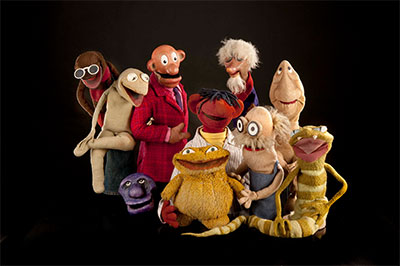
Since the film Muppets Most Wanted is opening this week, it seems like a good moment to talk about some favorite films that include puppets. 

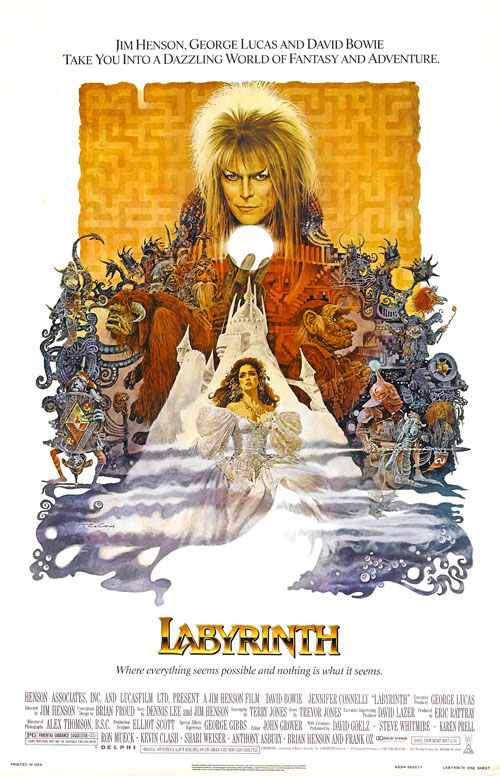
Labyrinth_ver2Genna remembers seeing Jim Henson’s Labyrinth for the first time in elementary school, at a friend’s house. What made the biggest impression on her at the time was the variety of the puppets and how they ranged in dimension. from the giant Ludo to the much smaller Sir Didymus and Hoggle. Genna also liked the way that the human actors (Jennifer Connolly and David Bowie) got to interact with the puppet characters. Today of course she is more interested in trying to understand how each puppet was made and manipulated, and given a choice, she would like to try performing either Ludo or one of the Fire Gang.

file_164905_2_underworld_2_posterThe other film series that Genna has been inspired by is Underworld, a trilogy of movies about vampires and werewolves. Like Labyrinth, many of the characters wear full body costumes with animatronic puppet heads that are manipulated with radio controls by multiple puppeteers. The mechanics of the legs, which have extensions inside the foam latex skin, and the details in the features and hair are all amazing. You can see some of the work it took to produce this in videos here and here.

Cecilia on the other hand, was first introduced to puppets on film with the ‘Lonely Goatherd’ marionettes in the classic musical The Sound of Music. The sequence was performed by Bil Baird and Cora Eisenberg, and the catchy tune, with puppets similar to a set from Mexico that she had, made a big impression on her as a kid. Labyrinth also became a favorite later in college, but the film that was an inspiration as she first started creating and performing puppets in high school was Fool’s Fire, an adaptation of the Edgar Allan Poe short story Hoptoad which was created by Julie Taymor and shown on PBS in 1992. Cecilia came across it as part of a retrospective of Taymor’s work that was shown at the National Museum of Women in the Arts in 2000. The story of a jester who takes revenge on the cruel king and court that enslaves him, it uses full body puppets to establish the difference between Hoptoad and his captors.

Hopefully some kids will see Muppets Most Wanted this weekend and be inspired to pick up puppets! What other puppet films do YOU love?

Sneak Peek

A description of the bean-nighe, one of the folklore characters we're researching.

A description of the bean-nighe, one of the folklore characters we’re researching.

Our next devised piece is inspired by the vast treasure trove of British and Celtic folklore and especially the supernatural creatures usually known as fairies. Thanks to a number of cultural factors (most prominently, Disney), we have a tendency to think of fairies as tiny and pretty, with sparkles, wings and magic wands. According to tradition however, they are far stranger and more dangerous. For centuries, people feared the fairies, calling them a number of euphemistic names (the Good Folk, the gentry, the Little Poeple) to avoid drawing their attention. To be suspected of dealing with fairies or being related to them led to persecution and on occasion, injury and death. Where did these beliefs come from? What are the rules for dealing with fairies and what happens when we break them? What does that say about our fears, hopes and wishes as humans? These are all questions we will be exploring as we begin to build puppets and create performance material in preparation for a workshop in June. We hope you will join us for the journey!

February Grab Bag

A round up of links and news we highlighted on Twitter this month: 

#1: Still from the documentary THE MAN WHO MADE ANGELS FLY.

#1: Still from the documentary THE MAN WHO MADE ANGELS FLY.

1. The Washington Jewish Film Festival has a documentary about puppeteer Michael Meschke called The Man Who Made Angels Fly playing March 1 & 2! We posted an interview with the festival director earlier this week and will be introducing the screenings, so come see some amazing marionettes!

2. Benedict Cumberbatch gets some counting help from the Count. I think the show Sherlock could use a few puppets.

3. A thought-provoking interview with Cheryl Henson about the potential pitfalls of being labeled a puppeteer.

4. Genna is working with Imagination Stage on their production of Rumplestiltskin for young audiences. We ran into some similar characters in our folklore research this year.

5. Our friend Ashley Hollingshead from Portland OR is raising money for a new devised theater show called Independent Women. Support new theater and make a contribution HERE.

Puppets & Film: An Interview with Ilya Tovbis

poster2wik

Puppeteer Michael Meschke’s life and work are the focus of the recent documentary The Man Who Made Angels Fly (2013), which will be in DC this weekend as part of the 2014 Washington Jewish Film Festival.  Patricia Germann, Wit’s End’s Managing Director, caught up with Festival Director Ilya Tovbis to learn more about the film and its selection for the festival.

Patricia Germann: What led you to select this film for the festival?

Ilya Tovbis: The base qualifier to be in the festival is purely quality and diversity of vision.  So on that characteristic it really stood out.  I think it’s a tremendous documentary, and a unique one at that.  It’s done without almost any interviews, and very little sound that’s not coming directly from what’s happening.  A lot of the film is just the puppeteering happening on stage, and you’re meant to gather that the weighty subjects being discussed, or the Greek tragedies, or the philosophy that’s on stage… You gather what importance they are to Michael Meschke himself.  At times he and his wife talk, but it’s kind of a prime example of the “show, don’t tell” mentality and of a documentary where – especially for me, who’s not a subject matter in puppeteers or the craft – it allowed me to understand it from a very human perspective, and that was immediately attracting.  I think the cinematography is tremendous, the use of light and air, and just space and the pacing of the whole documentary is absolutely fabulous.

PG: It really did come across in the trailer that the puppetry and the puppets support the storytelling aspect of the film.

IT: More so than that, they’re really the prime characters, and I think the reason he agreed to be on film was that he’d be allowed to sort of speak through them and speak through his art more than one-to-one with a moderator before the camera.

PG: You mentioned that you’re coming from a background that is not in puppetry, and I’m wondering what in particular non-puppeteers would get out of this film.

IT: For me, it piqued my interest in puppetry and is something that I hope to look into more post-festival.

PG: That’s wonderful to hear!

IT: A lot of what I saw on screen I would love to see in person, and I just had never considered going to such a show.  So in terms of piquing interest, it’s amazing. Also, his life is a fascinating account.  It’s certainly not exclusive to him, but it is a pretty unique story in that he grew up thinking that he was Christian.  He had some nominal notion of his past and heritage, but he actually found out that he was Jewish as he was being set upon by a mob of people.  He and his mom hid in a church, and he asked her, “Why are these people after us?” and she said, “Well, you happen to be Jewish.” And that’s informed a lot of his artwork.  From a Jewish Film Festival perspective, that’s a tremendous story of finding one’s identity and doing with it something unique. I think that’s why he does the puppetry and why he takes on the stories that he does.  A lot of these stories are grand myths, and it’s evil fighting good, and it’s getting at the root of what humans are and what our universal struggles are.  I think that’s clearly rooted in his personal history.

44431_1

Michael Meschke, puppeteer.

PG: Is there anything else that you wanted to share about this film, or that you think would be of particular interest to the puppetry community?

IT: One thing that’s important for us about this film within the context of the festival is that it’s part of our spotlight on Polish cinema and where that particularly intersects with his stories – Again, this notion of finding out you’re Jewish a little bit later on.  That was quite common in Poland, which is just beginning to grapple with its Jewish history, and it’s become a real topic of conversation recently.  You’re seeing that again in cinema, and a lot of that is about the ‘hidden’ identity and people discovering that they’re Jewish and that their family hid it from them as a means of perseverance and moving forward.  So from that standpoint, it’s in a larger framework of films, but it also is very unique and set apart from the other ones that we have like Mamele and Ida and Aftermath, that all make up that Polish focus.

PG: I’m remembering now from the description that there are a number of different countries credited in the production of this film.

IT: Yes, so it’s a co-production: the filmmaker is Polish and quite a number of the crew are Polish, and also the UK and France – the subject lived there [in France] for a while and much of it happens there.  When you have a number of countries credited, it means that considerable funding or cast/crew (in this case crew, since there isn’t really a cast, being a documentary film) come from those countries, and as film has been globalizing, you notice more and more that those list are getting longer.  It used to be a huge deal if 2 countries collaborated on a film, but it’s becoming increasingly common as the borders come down.

The Man Who Made Angels Fly screens March 1-2 as part of the 2014 Washington Jewish Film Festival. Tickets $12 each. Learn more at www.wjff.org.

Interview edited for length and clarity.

Rumplestiltskin, Habetrot and Tom Tit Tot

One of the most popular of the Grimm’s fairy tales will come to life in our neighborhood soon, when Imagination Stage in Bethesda opens Rumplestiltskin later this week. Genna is working as an understudy on the show and pointed out a connection to the folklore research we’ve been doing for our next devised project; while the Grimm tale is German in origin, there are numerous British versions of roughly the same story. Comparing these different tales is fascinating, so here are a few points we found especially interesting.

Habetrot, the Border fairy of spinning and an avatar of Rumplestiltskin.

Habetrot, the Border fairy of spinning and an avatar of Rumplestiltskin.

While Rumplestiltskin from the Grimms’ tale is always male, several UK stories, especially from Scotland have a female main character who assists the hapless girl with her spinning. Habetrot, from the Border region between England and Scotland, is the patron fairy of spinning and folklorist Katherine Briggs tells us that  in addition to helping girls with their spinning work, a shirt woven by her was supposed to be a remedy for many different diseases. Whuppity Stoorie (also called Fittletot) comes from further north in Scotland and is described by Robert Chambers as ‘aristocratical’ and all dressed in green, like most fairies. Almost every version of this story in the UK has a character whose name ends in ‘tot’ or ‘trot’, including Tom Tit Tot and Terrytop. Another interesting difference between the German and British versions of the story is the character of the girl who must spin: in the Grimm tale, the miller’s daughter is good and obedient, ending up in her sticky situation because of her foolish father. In the British versions of the tale, the girl is lazy and greedy, lying about her own skills; but through her determination and cleverness she is able to defeat the fairy or devil and end up alright in the end. All versions of the story include the demand for the girl’s firstborn child (or sometimes for the girl herself to go away with the devil), the challenge to find out the true name and then its last minute discovery. Only kindly Habetrot helps out the lazy girl for no reward at all and even convinces the bridegroom that her beauty would be ruined by spinning and so she should never touch a spindle again.

Check out Rumplestiltskin at Imagination Stage if you have kids, and for something a little more experimental, keep an eye out for more information here about our new devised folklore piece. And the next time you tell someone a story, remember that the phrase ‘spinning a yarn’ originally came, rather appropriately, from tales like Rumplestiltskin and Habetrot.

January Grab Bag

A roundup of events and people we highlighted on Twitter this month: 

Giant flower from Under the Canopy.

Giant flower from Under the Canopy. See item #5.

1. The Kennedy Center is hosting a World Stages Festival this March and there will be PUPPETS! Handspring Puppet Company,  that created War Horse, is working on a production of A Midsummer Night’s Dream and Ronnie Burkett Theatre of Marionettes from Canada is doing a show called Penny Plain. There will be puppets on display at the Kennedy Center that you can see for free. So yes. You should go.

2. Puppetry and activism are two of our favorite things. So even though we haven’t actually met in person, we’re big fans of The People’s Puppets of Occupy Wall Street. Hopefully one day we’ll get to work on something with them and maybe it will even involve giant puppet drops of water, like the ones you can see on their Facebook page.

3. All DC puppet fans should check out The Adventures of Alvin Sputnik: Deep Sea Explorerplaying at the Artisphere in Rosslyn from February 6-9. This is a heartwarming story about a deep-sea explorer in search of lost love, told through a combination of sound, puppetry and animation. Created by Weeping Spoon Productions from Perth, Australia, I saw this at the Edinburgh Fringe back in August and am looking forward to seeing it again.

4. Puppets in Prague is an amazing place to learn about marionettes (I did a workshop with them back in 2011) and they have a whole bunch of workshops going on this year. If you’re thinking about taking a trip to Prague (and really, why wouldn’t you be?) check them out.

5. Have we mentioned that we’re going to be at the Atlas INTERSECTIONS Festival this year? With not one, but TWO shows? March will be here before you know it, so you should get moving and buy tickets for our pieces Under the Canopy and Fabulas MayasWith folktales, shadow puppets, and rainforest creatures, you really can’t go wrong!

A Brief History of Puppets and Social Justice

Oxford Dictionaries defines social justice as “justice in terms of the distribution of wealth, opportunities and privileges within a society.” In honor of Dr. King, who fought for equal opportunities for so many, this week we have a short overview of how puppets have contributed and continue to contribute to the fight for social justice.

Giant puppet from the Million Puppet March in DC. November 2012.

Giant puppet from the Million Puppet March in DC. November 2012.

In his 1990 essay “The Radicality of the Puppet Theater,” Peter Schumann calls puppetry “…conceptual sculpture…uninvited by the powers-that-be.” Over the centuries, the low status of puppets in the art hierarchy has allowed them to be agitators for justice, the perfect mouthpiece for complaints about the government. Today puppets are used by  theaters and activist groups across the US as an essential visual component of protests as well as a way to empower communities for fight for necessary change. While this is far from a complete picture (read this essay for more information), here is a short overview of the history of puppetry and protest.

Puppetry has always been a transient art form. From medieval times through the nineteenth century, puppeteers moved from place to place, often performing outdoors rather than inside theaters. As Italian commedia characters such as Pulcinella travelled from country to country, these archetypal figures took on local characteristics and became distinct. However, whether they were named Kasperle (in Germany), Karagioz (in Turkey) or Punch (in England), all of these puppets entertained by breaking rules, upsetting authority and sometimes commenting on local issues and problems of the day. In early nineteenth century France, an out of work silk worker and dentist named Laurent Mourguet created the character Guignol, who became a voice for the working people of France disenfranchised by the combination of industrialization and economic depression. Later in the twentieth century, as protests multiplied in the 1960’s, puppets (especially giant ones) became a widespread part of the action.

The most famous puppet theater associated with protest is probably Bread and Puppet Theater, located in Glover, Vermont and formed in 1963 by Peter Schumann. Originally based on the Lower East Side of New York City, Schumann began by creating shows about local problems and eventually moved on to deploring unchecked capitalism, the Vietnam War and other national issues. Bread and Puppet still takes their puppet and circus shows (always with live music) on tour each year and creates massive community circuses each summer at their farm in Vermont.  Two other companies that provide puppet support to activists on a range of issues are the People’s Puppets of Occupy Wall Street, in New York City and Puppet Underground, in Washington DC. Run by volunteers, they hold workshops in puppet-making and create large and small scale puppets and artwork for protests.

Over the years, several groups that began by working on protests and activism have started to also provide educational resources and community arts support in various cities around the country. Wise Fool Puppet Intervention began as an arts group adding visual impact to activist events in California, and artists with the group later founded Wise Fool New Mexico, which seeks to empower people through puppetry and circus arts. In Philadelphia, Spiral Q Puppet Theater provides arts programming to schools, support for communities trying to express a vision of change, and leadership training for young people. Across the country, puppets are still speaking for those with no voices; still part of a movement toward change for the better.

December Grab Bag

Puppets at the Smithsonian. Photo from www.si.edu

Puppets at the Smithsonian. See Item #2.        Photo from http://www.si.edu

A round-up of events, exhibits and shows we’ve highlighted on Twitter this month:

1. Will you be up late on Christmas Eve, wrapping gifts? Turn on CBS at 11:35 pm to see this Nativity show with puppets from the late Jane Henson. Remounted by Cheryl and Heather Henson as a tribute to their mother, it looks like it will be an amazing performance.

2. If you’re showing family around DC this holiday, be sure to stop by the American History Museum on the National Mall and check out the puppetry exhibit on display. With a whole group of famous puppets, it should be fun for puppeteers or anyone interested in pop culture.

3. I’ve spent many hours watching The Muppet Show, but somehow I missed this lovely segment with puppeteer Bruce Schwartz animating a ballerina that was part of a show with guest star Cleo Laine. Start at about 3:30 to see the dance (or just begin at the beginning if you want some quality time with Dr. Julius Strangepork).

4. Puppets have been sadly lacking in American television since The Muppet Show ended in 1981. Fortunately, for those of us who prefer talking puppet heads to talking human heads when it comes to politics, Fusion is now producing No You Shut Up, a topical news show hosted by comedian Paul Tompkins and a panel of four puppets.

5. And finally, Pat came across the Irish theater company Branar through a local film festival. With magical wordless shows for children and elegant, minimal sets, this is our type of theater. Fingers crossed we get to visit Ireland one day and see their work in person.

Research, Research, Research

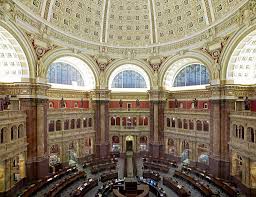
So here’s a little secret: I love research. It’s definitely not the most glamorous part of puppetry and doesn’t provide as many fun photo or video opportunities. But lately I’ve been spending lots of time in this room, and you have to admit, it’s beautiful:

loc1

That’s the Main Reading Room at the Jefferson Building of the Library of Congress and it’s a pretty fun place to do research. You have to request books ahead of time and show a special card to get them (yes, it feels like belonging to a secret club). There are desks with little lights and numbers on them and there’s a huge echo every time someone drops a pencil. The books often have special labels in the front and if I need a break from reading, I can stare up at lots of statues and paintings all around the ceiling. What’s not to love?

We are deep in Phase 1 of our next devised piece, which is inspired by British folklore and in particular, Katherine Briggs’ seminal work A Dictionary of Fairies. Genna and Amy and I, as well as several other collaborators, have been reading all the folktales, fairy traditions, and stories of fairy encounters we can get our hands on. We’re not entirely sure what kind of puppet piece we will end up with, but it’s going to be lots of fun getting there!

November Grab Bag

Moses from THE TABLE. Photo by Lorna Palmer and Xue Qian

Moses from THE TABLE. Photo by Lorna Palmer and Xue Qian

1. Last week, Pat and I got to see a fantastic show by Blind Summit Theatre from England. It was called The Table and consisted of three puppeteers and one puppet telling the story of Moses, along with many clever asides. Really amazing work and the company website includes a set of tips for puppeteers which are also great.

2. A fascinating article about marionettes built by Ralph Kipniss, an artist I had never heard of before. While the Kickstarter campaign mentioned in the article did not reach its goal, there are still people working to raise the money to find a home for this amazing collection and preserve it for future generations. You can find out more and help out by donating here.

3. We made lots of puppets for Cabinets of Kismet out of various kinds of paper, but one kind we didn’t really use was tissues. Maybe if we had seen this video by Yuki Ariga, we would have:

4. Last but not least, yesterday was Thanksgiving, which of course means the puppets that had the biggest audience were the Macy’s Parade balloons. Did you know that Tony Sarg, who first came up with the idea for those books, was a puppeteer? Here is a VERY short clip of him with one of his graceful marionettes. The balloons aren’t nearly so graceful, but they are a lot bigger.